Top 10 youngest countries in the world - ranking of newly formed states

What is a "state"? The question is not as simple as it seems - if we count by different methods, there are not 193 or 256 states on the globe today. And all this is because there is no single criterion of definition by which this or that administrative entity can claim the status of a full-fledged country.
Is Kosovo a state? Ask a Serb or a Russian. Are Abkhazia and South Ossetia states? In Venezuela and Nicaragua they will say yes! Just like in Russia, of course. And Georgians will be outraged. So let's consider the presence of the youngest states on our planet beyond any methodology.
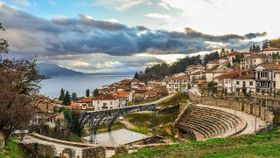
Northern Macedonia

This country has had the status of a state twice in history. The first time was at the time of the great Alexander the Great, and the second time it received it only in 1991, after leaving the SFRY. And even up to 2019 there were frictions with Greece over the historical name.
The climate is favorable... as, indeed, in the whole territory of the Balkans. Therefore, agriculture is well developed here, with no less than 60% of the country's area of 25,333 square kilometers occupied by farmland. The official languages are Macedonian and Albanian, and texts are written in Cyrillic alphabet.
It is not a member of the EU, although it is a candidate for accession. The issue has been blocked so far, this time because of the position of Bulgaria, which believes that the Bulgarian minority is oppressed in Macedonia.
Eritrea

At one time, the name did not leave the newspaper pages due to the internal conflict in Ethiopia - Eritrea at that time was actually a province of that country, although the official status was "Federation of Ethiopia and Eritrea".
And so, after a series of inter-ethnic conflicts, Eritrea finally gained the coveted independence from Ethiopia in 1993. However, the standard of living has not improved - the two halves of the once united country remain among the poorest countries in the world.
The main source of income is the export of agricultural products such as grain, bananas, sesame, corn and papaya. Recently, for the sake of food security, such economic sectors as cattle breeding and fisheries, including marine fisheries, have been intensively developed.
By the way, one of the subjects of dispute with Efioia was (and still is) Ethiopia's access to the sea - as the formation of the state of Eritrea cut Ethiopia off from the coastline, making it a completely land-locked state.
Croatia

Another "fragment" of Yugoslavia, along with Northern Macedonia. Independence was formalized in 1993, although the current borders were acquired only in 1998, and by military means - the echoes of the Yugoslav Civil War "sounded" here for 5 years, conflicts with neighbors flared up and subsided!
It has access to the warm Adriatic Sea, the total area of the country is 56,538 square kilometers. Due to the favorable climate, all coastal cities of the country are resort areas.
In addition to tourism, which has been given the status of "eco" due to the impeccable purity of the sea and mountain air, such economic sectors as pharmaceuticals, food and chemical industries have developed over the years of independence.
Bosnia and Herzegovina

Ignore the double name - Bosnia and Herzegovina is one country. This other territory of the former Yugoslavia is only slightly smaller in area than Croatia, with an area of 51,129 km2.
During the Roman Empire it was the land of Illyria, inhabited by peoples related to the Italians. Slavs appeared here only in the VII century AD and settled here for good. For a long time, however, they were under the rule of the Ottoman Empire, which left here a trace in the form of architectural monuments (mainly mosques) and the way of life in those areas where Islam is now the dominant religion.
Bosnia and Herzegovina inherited from Yugoslavia a strong industrial potential in the form of electricity, leather, footwear, metallurgy and building materials. And thanks to competent leadership, the country quickly recovered from the war of the 90s.
Czech Republic and Slovakia

Unlike Yugoslavia, the Czechs and Slovaks "divorced" peacefully, the partition of Czechoslovakia in 1993 was not accompanied by any economic and political upheaval.
These Central European countries traditionally have a strong industrial potential - it is not without reason that after the annexation of Czechoslovakia by Germany in 1938, the power of the Wehrmacht increased twofold.
By the way, Germany has always had a cultural influence on Czechs and Slovaks - it is not without reason that the beer here is as excellent, the inhabitants are as precise and punctual as Germans, and the streets of the cities are as clean as somewhere in Bavaria or Saxony.
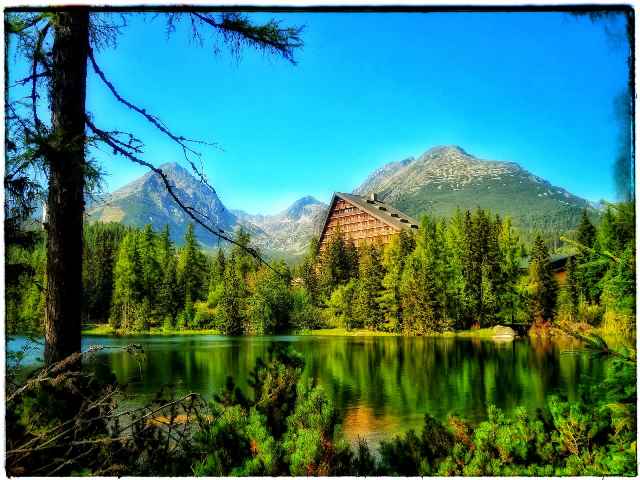
The area of the Czech Republic is 78,866 square kilometers, the relief is diverse: forests, mountains, fields, rivers, hills, so there are enough picturesque views. Slovakia is slightly smaller - 49,043 square kilometers. The relief is a bit more mountainous. These are the Western Carpathians and the High Tatras, almost indistinguishable from the Swiss or Austrian Alps. The ancient architecture of both Bohemia and Slovakia bears traces of Gothic and Romanesque influences.
Palau

A Pacific island nation that gained independence in 1994, after centuries of possession by Spain, Germany, Micronesia, and the United States.
The geographic location near the equator also dictates Palau's main economic mode. It is, of course, tourism. The average annual temperature of 25 degrees Celsius, warm ocean waters (the cold El Niño current does not reach here, which makes the entire west coast of both American continents unfit for swimming), exotic fruits and seafood - all this became a factor in the gradual improvement of the islanders' life after the country gained independence. Although a certain attachment to the U.S. economy still remains to this day.
East Timor

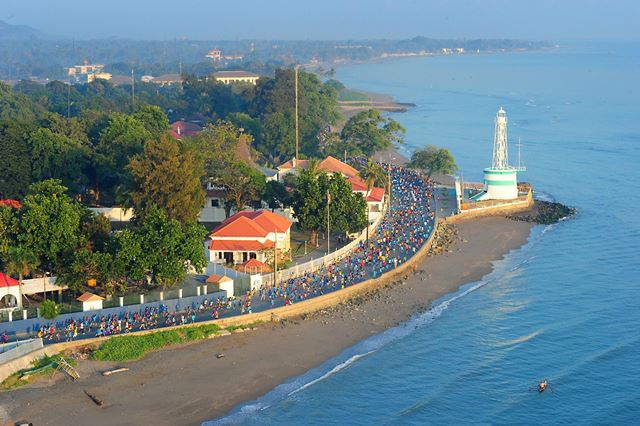
This former Portuguese colony became an independent state in 2002. It has an area of 15,007 square kilometers and a population of just over 1.3 million.
There are two branches of development in agriculture. On internal needs of the country works cultivation of rice, cane, corn and legumes, and for export mainly goes coffee, juice of hevea from which natural rubber is received, and coconuts. Livestock breeders raise goats, horses and buffalo. As a traditional trade remained pearl fishing, local divers (mostly women) do it without scuba diving, and this craft is not one hundred years old.
Tourism is still underdeveloped due to insufficient infrastructure. For example, the hotels here are only of "two-star" level, and mostly those who come to relax on the local beaches are satisfied with "budget" vacation, renting primitive housing with almost no amenities from the locals.
There is some oil and gas, and also from industry fishing and fish processing is developing.
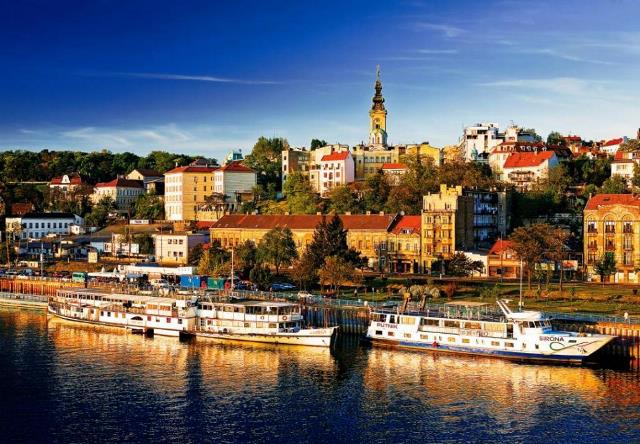
Serbia

Serbia became a separate, independent state only in 2006.
The territory of Serbia is 88,361, of which 80% is in the Balkans and 20 in the Pannonian lowlands. Serbia was under the rule of the Ottomans for several centuries (as well as the neighboring countries in the Balkans), and only after World War 1 it became the founder of the Serbian Kingdom, and then the Kingdom of Yugoslavia.
Serbia existed as a state within the SFRY from the end of World War 2 until the early 2000s. After the dissolution of SFRY until 2006 was the Confederation of Serbia and Montenegro, but after the Montenegrin referendum the fragmentation of the former Yugoslavia continued - Montenegro left the Confederation.
The 588-kilometer long, full-flowing Danube flows through the country, and it also serves as Serbia's border with Croatia and Romania, while the Danube's tributary, the Drina, separates Serbia from Bosnia and Herzegovina.
The climate is Mediterranean, especially in the south, on the Adriatic coast, and continental in the north, in the mountainous areas. The population is 7.8 million. There are developed agriculture and industry, the country gets a good income from tourism.
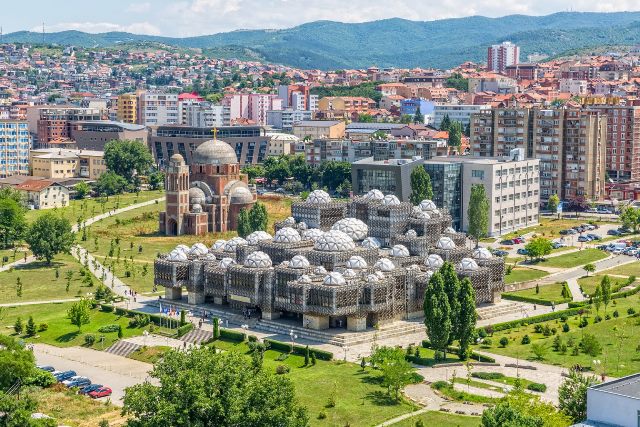
Kosovo
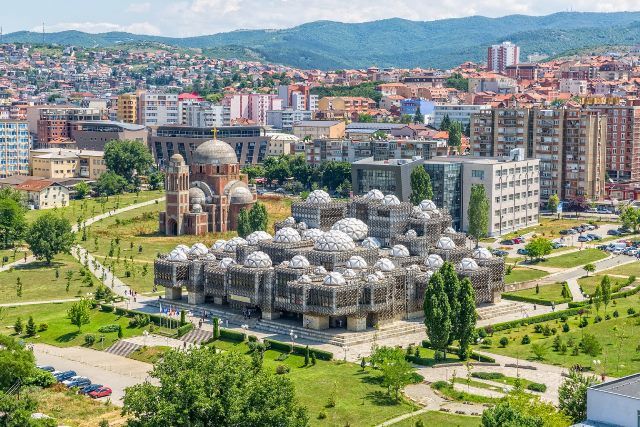
An independent state? It depends on how you look at it! Russia has not recognized its independence, remaining committed to the Serbian view that it is Serbian territory.
Kosovo in this respect is a lesson to all those countries that let ethnically alien people into their territory. Because sooner or later they will claim that this land is theirs!
However, Serbia would have been able to cope with the separatist sentiments of Kosovo's Albanians, if not for NATO's intervention - which led to the division of the Socialist Federal Republic of Yugoslavia (SFRY).
With not bad natural conditions and availability of a great number of minerals, the prospects of industrial development of Kosovo are vague, as there are no direct investments due to non-recognition of Kosovo as an independent state by many countries. And also shadow business in the form of smuggling and drug trafficking - according to EU data, Kosovo provides 80% of drug trafficking to Europe.
South Sudan

This is one of the few countries in Africa where you can take part in a live safari or simply observe the life of wild animals in the numerous national parks of South Sudan. Because it is the only perhaps well-developed sector of the economy, the rest are still in their infancy.
And this is despite the fact that there is gas, oil and heavy industry in the independent territories of South Sudan. But alas, all of this has been shattered by the civil war, which resulted in the sovereignty of the former southern lands of 620,000 square kilometers, which broke away from the "Greater" Sudan in 2011. In the upper reaches of the Nile.
Almost everything in the country has to be created from scratch. And asphalted roads (there are only 30 km of them), and water supply, which is not even in the capital, and in general, all the infrastructure familiar to Europe.
But the Sudanese are not discouraged and believe that with independence they will succeed.