Project 22220 icebreakers - universal nuclear "battering rams" against Arctic ice
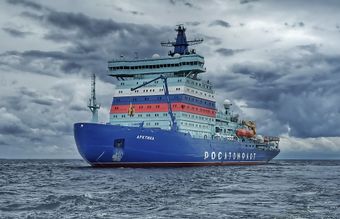
Have you heard of the giant icebreakers that blast their steel might through the icy expanse of the Arctic Ocean? If you imagine old broken-down vessels, heavy and slowly breaking through the ice like wounded whales, this is not the case!
These "monsters" literally break stereotypes about ship power, embody the latest ideas of technical progress and the ability of mankind to overcome natural barriers. We are talking about Project 22220 ships - a new word (well, or figures) in the world of icebreakers.
Project 22220 - what it is
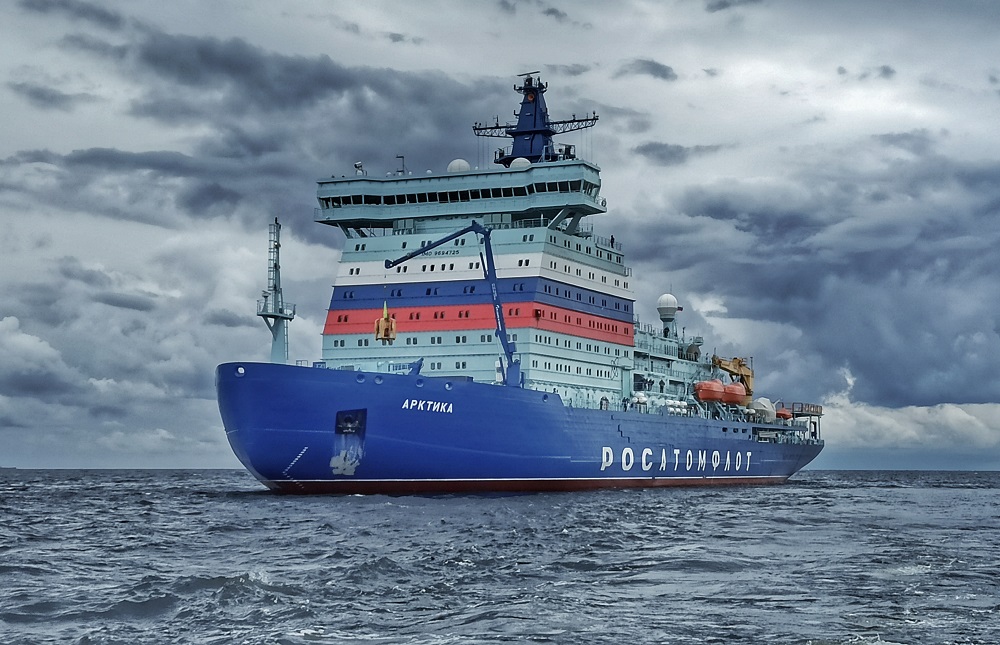
This is an extremely ambitious initiative in the field of shipbuilding in recent decades. Under this index lies a new generation of nuclear-powered icebreakers designed to ensure uninterrupted and safe navigation in the Arctic Ocean and Arctic zone.
Goals and objectives of the project:
- Creation of icebreakers capable of operating in extreme conditions, breaking through ice up to 3 meters thick (and the width of the channel to be laid is 37 meters).
- High autonomy of operation, which will allow the vessel to operate for a long time without the need for refueling or resupply.
- Development of a propulsion and power system based on nuclear energy.
It is worth noting that the project has been developed taking into account the growing interest in the Arctic related to hydrocarbon exploration and production, scientific research and the growing interest in the Northern Sea Route as a short transportation route between the European part of Russia and the Far East.
It is planned to build 7 icebreakers. This will allow Russia to strengthen its position in the Arctic and ensure safe and efficient navigation in the region.
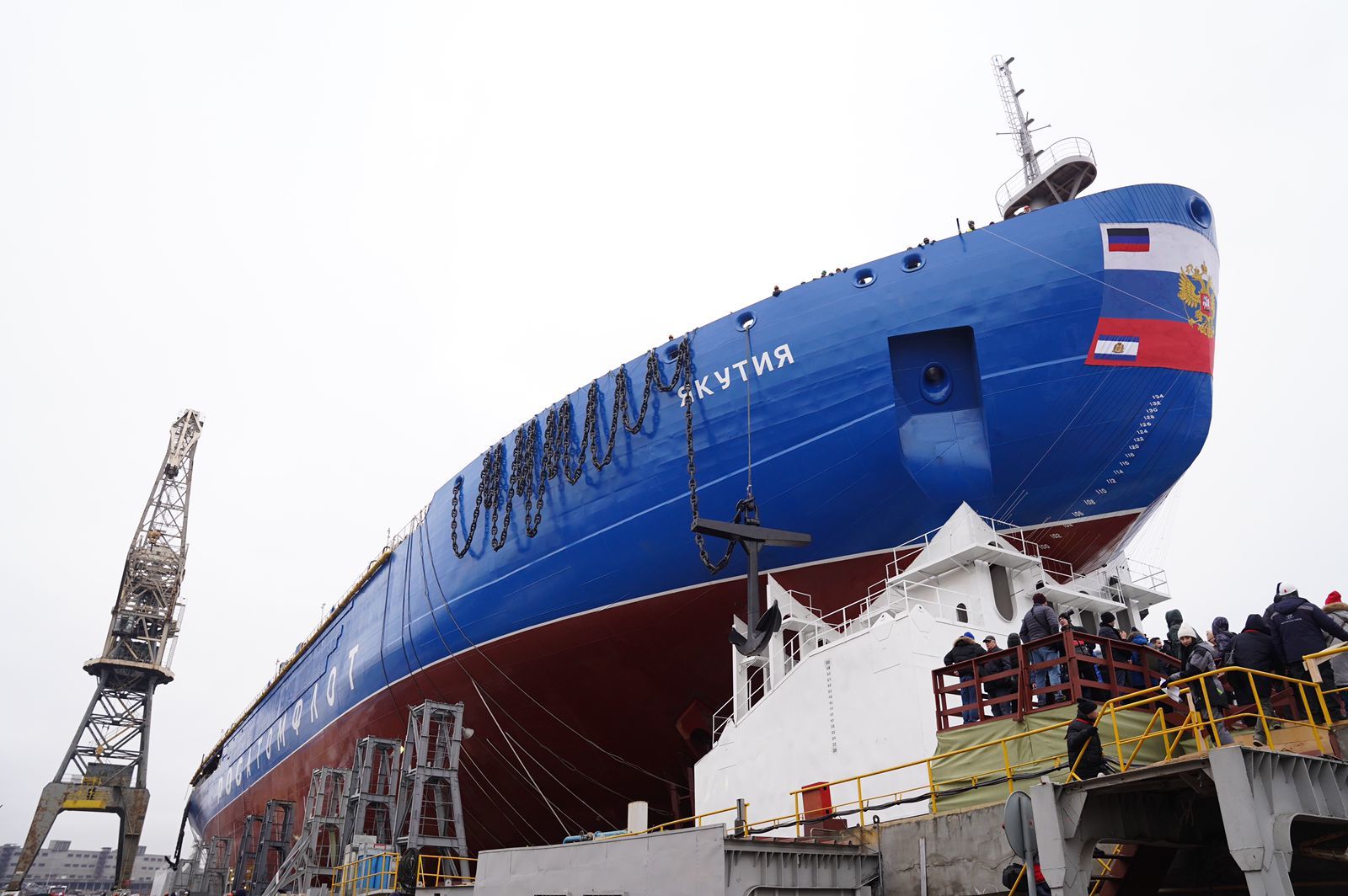
There are already 3 such ships in service. Work on 2 more is already in the process of completion, and 2 more ships are just being prepared for laying down.
| Name | Commissioning |
|---|---|
| «Arctic» | 2020 |
| «Siberia» | 2022 |
| «Urals» | 2022 |
| «Yakutia» | 2024 |
| «Chukotka» | 2026 |
| «Kamchatka» | 2028 |
| «Sakhalin» | 2030 |
According to plans, Project 22220 icebreakers are to replace old icebreakers built back in Soviet times:
- "Vaygach" (scheduled for decommissioning in 2023 - 2024).
- "Taimyr" (to be decommissioned in 2025 - 2026).
- "Yamal" (to be decommissioned in 2027 - 2028).
- "50 Let Pobedy" (will go to "rest" after 2035).
Anatomy of Project 22220 icebreakers
These vessels are designed to operate in the most extreme conditions and are considered real "monsters" of the Arctic seas. Let's take a look at their "anatomy".
Hull design and construction
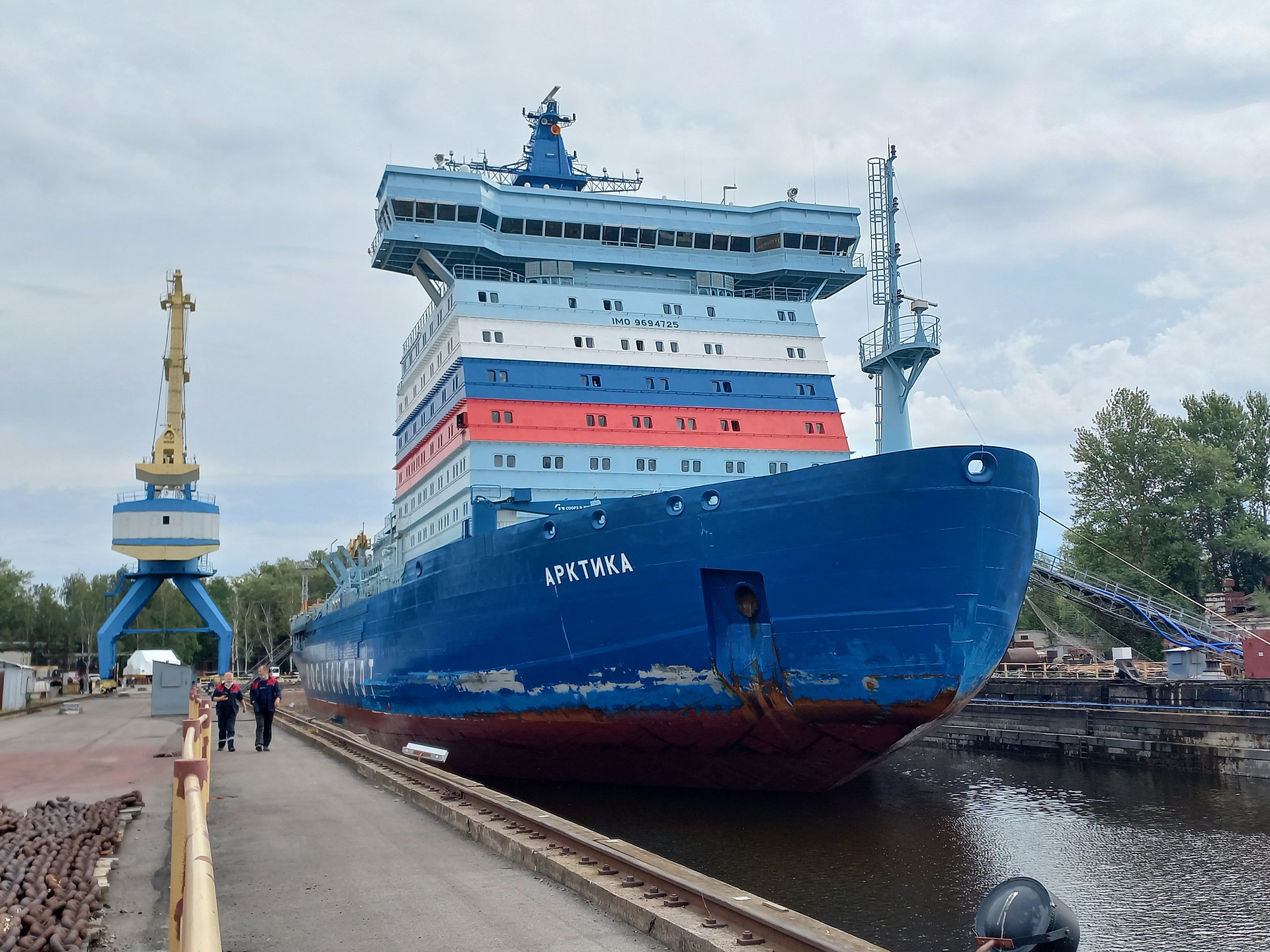
The icebreaker hull is designed for optimal combination of strength and maneuverability. The shape of the hull allows to reduce resistance when moving through ice, making it easier to break through icy obstacles.
- The hull is made of special steels resistant to low Arctic temperatures.
- The bow of the hull is reinforced and optimized for ice breaking, allowing the ship to move forward while breaking through ice obstacles.
Power plant: nuclear reactor
The main source of energy for the ship is the nuclear reactor.
- Thanks to it, the icebreaker can operate for a long time without the need for "refueling".
- The reactor provides energy for all the ship's systems (including propulsion, heating and life support systems).
Propulsion system
It is designed to provide power and maneuverability.
- Azimuthal moving columns allow the icebreaker to change direction quickly, which is important in difficult ice conditions.
- Engine power provides the necessary thrust to break through the ice and maintain speed.
Applications and benefits
Let's take a look at the applications of these ships and their key benefits.
- The main task of icebreakers is to provide a safe path for other ships. This is especially relevant for northern transportation routes, where icy conditions pose serious obstacles to navigation.
- Given the growing interest in Arctic hydrocarbon reserves, Project 22220 icebreakers will provide safe navigation and support for exploration and production.
Yes, these ships can be used as floating laboratories and bases for scientific research in the Arctic, providing researchers with everything they need to work in harsh climatic conditions.
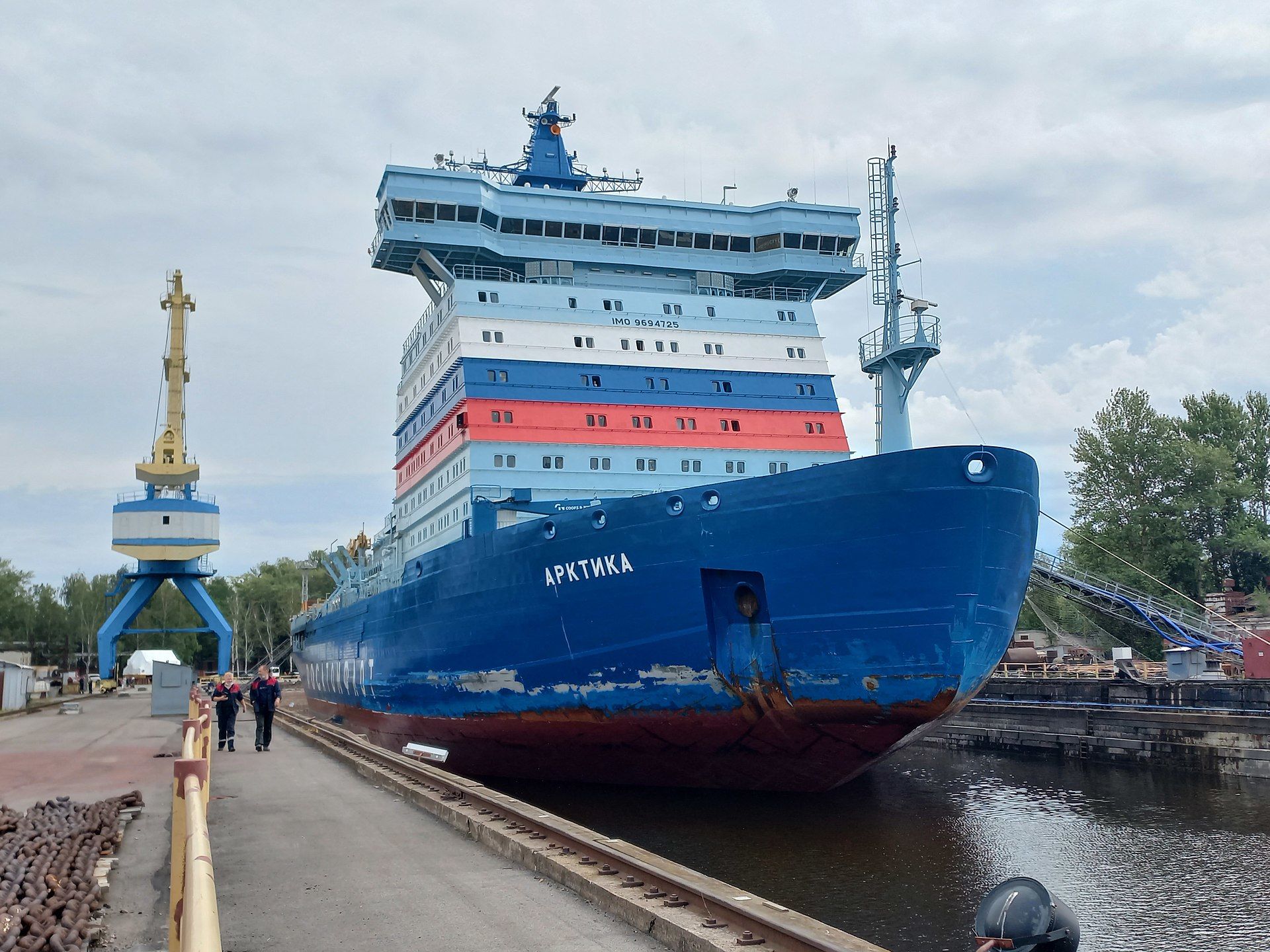
Among the main advantages are the following:
- Due to their design, construction and nuclear propulsion, the vessels are capable of operating in harsh environments for long periods of time without refueling or maintenance.
- Azimuthal moving columns and powerful engines provide excellent maneuverability.
In addition to their main task, icebreakers are adapted for such tasks as logistics, scientific research and environmental monitoring.
And what without ecology: the use of nuclear energy reduces emissions of harmful substances into the atmosphere. This is especially important in such a vulnerable region as the Arctic. But there is a controversial situation here. Why? Let us tell you why.
Challenges faced by icebreakers
In the harsh Arctic climate, even the most advanced icebreakers face a number of challenges.
One of the most obvious challenges is the ice environment itself. Dense, multi-year ice can present a serious obstacle for powerful icebreakers. The unpredictability and dynamics of ice conditions require the ship's crew to constantly monitor and analyze the situation in order to choose the best route and avoid dangerous areas.
Another challenge is related to maintenance. For example, ships are subjected to significant mechanical loads, resulting in damage to the hull, propulsion system or other ship components. Such damages need to be repaired promptly. And this is difficult due to remoteness from the base ports and lack of necessary spare parts on board the ship.
Another problem is the environmental issue. As it was already mentioned, Project 22220 icebreakers use nuclear power. This reduces carbon dioxide emissions, but possible accidents or leaks of radioactive materials pose a much more serious threat not only to the Arctic ecosystem, but also to the wider planet.
To summarize
Project 22220 icebreakers are the embodiment of engineering genius and human aspiration to conquer the Arctic. These ships not only demonstrate technical progress, but also serve as an important component of the development of northern regions, thus ensuring safety and the possibility of active movement in conditions of perpetual ice.