Legendary pistols of the USSR - list of famous (and not so famous) examples of Soviet weaponry

Although the legendary Soviet Union still causes a lot of controversy, we must admit that in those times all the benefits of our modern life were born. A lot of new equipment, transportation, and including weapons were made - and some of these technologies still work today. In this article we have collected a selection of Soviet pistols, from the well known Makarov to the curiosities like the "Baltiets" or "PSS".
APS
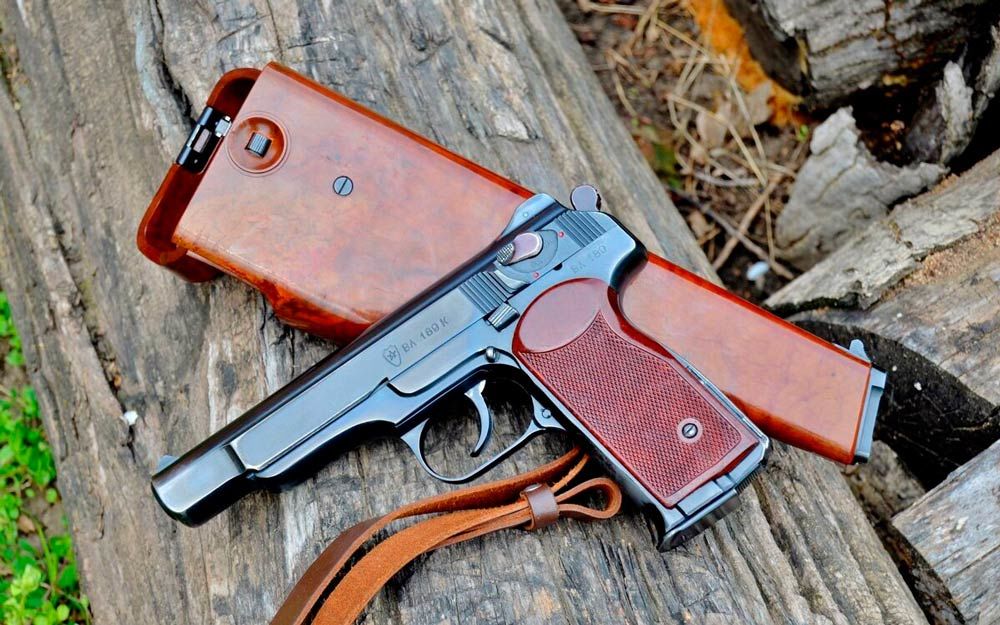
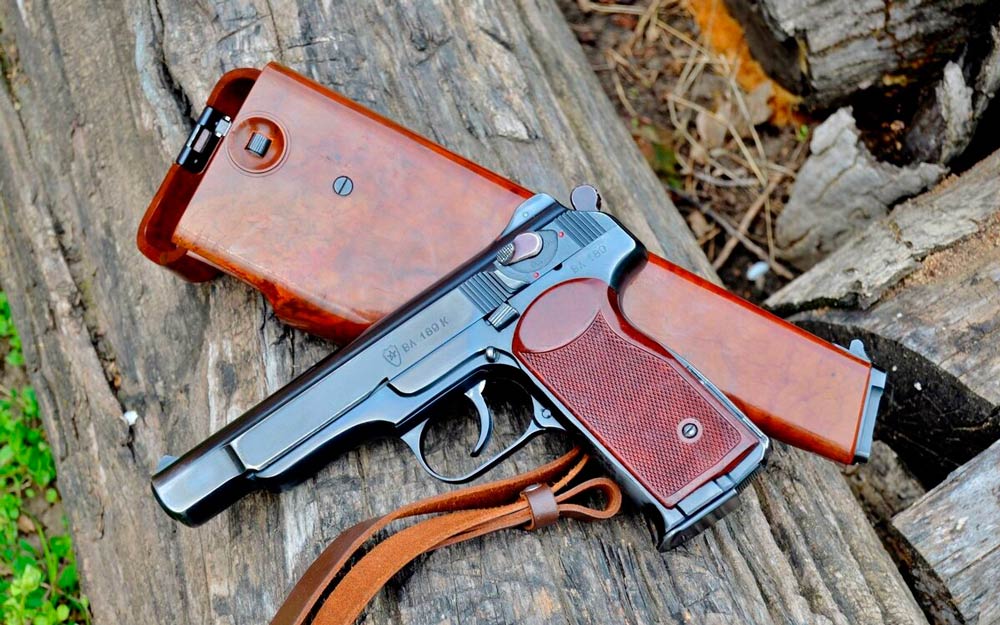
The APS, also known as the Stechkin automatic pistol, was developed by Igor Stechkin in the late 1940s. The pistol was adopted by the Soviet Armed Forces in 1951. It was produced from '51 to '58.
APS pistol is a semi-automatic pistol, which can be operated in both semi-automatic and automatic modes. It has a detachable shoulder stock, which also serves as a holster.
Originally designed for Army reconnaissance units, vehicle crews and special forces, as the automatic fire capability allowed for increased combat effectiveness in close combat.
- Adopted into service: 1951
- Units produced: ~94160
- Caliber: 9x18 mm PM
APB
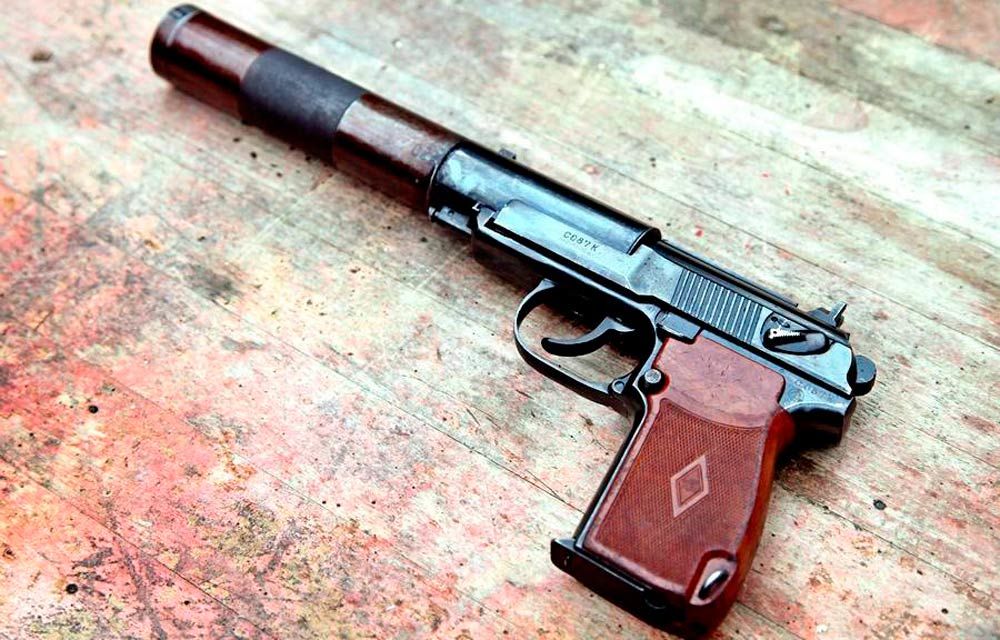
Legendary silent automatic pistol based on the APS. Adopted into service in '72. Production of the Soviet legacy continues to this day.
It does not have many differences from the "progenitor" APS. The main innovations are the possibility of using a silent and flameless firing device, as well as a more convenient folding metal buttstock.
It is used mainly by special forces and reconnaissance units for concealed fire.
- Adopted into service: 1972
- Caliber: 9x18 mm PM
VAG-73

A 7.62 caliber automatic pistol chambered for the cartridge. Details of the creation of the VAG-73 are somewhat vague, but it is believed that it was developed for specialized military use. The designer was Vladimir Gerasimenko.
The exact date of adoption is uncertain, but it was used in the 1970s. The name of the gun refers to the initials of the creator and the year of invention - 1973.
The pistol was notable for its automatic firing capability, as well as a special pneumatic bolt retarder. The magazine capacity was surprising, as it could hold 48 rounds.
PSS «VUL»
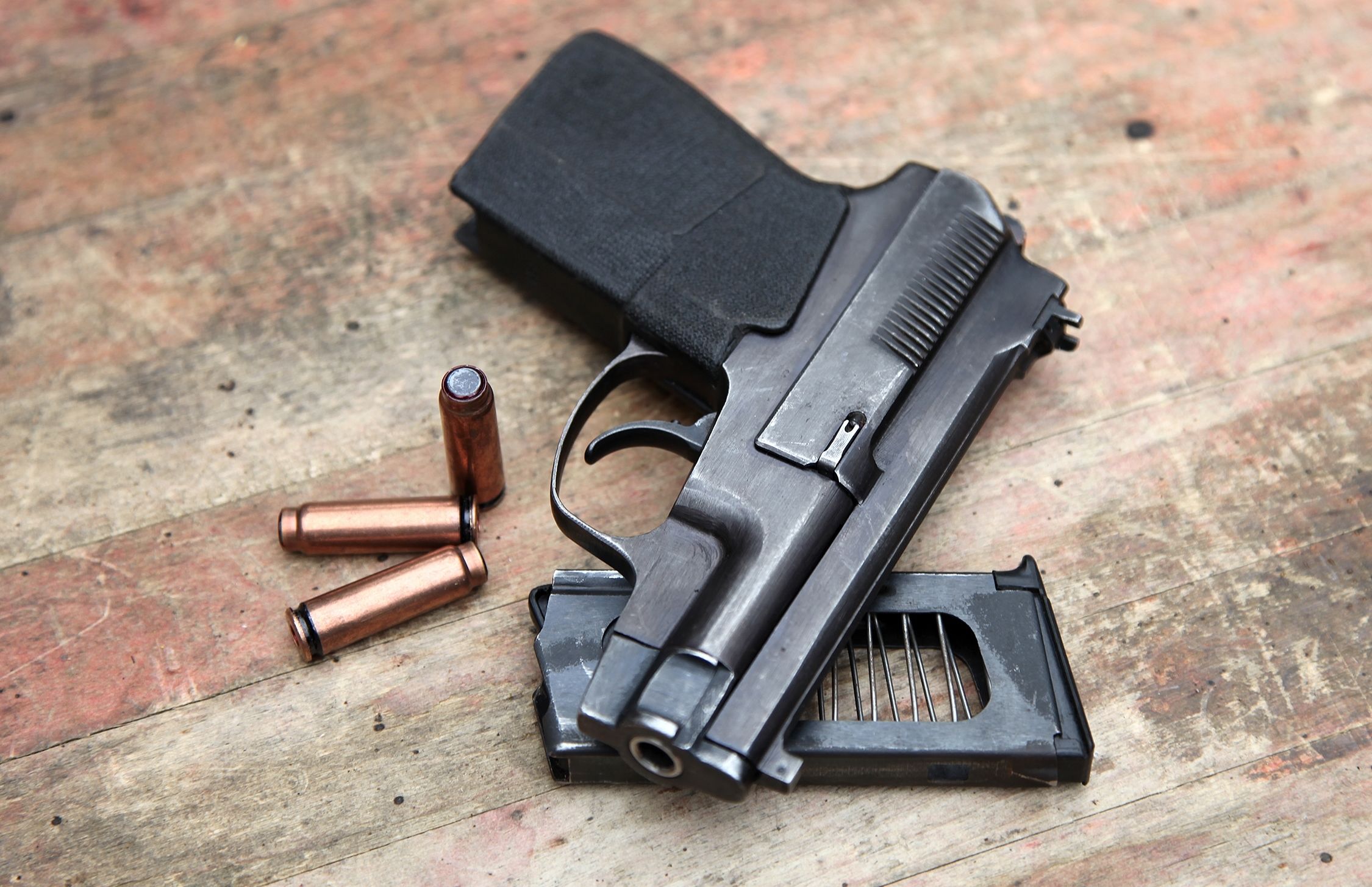
Developed in the 1980s, the VUL PSS was a unique pistol with a specialized ammunition system. Designed for covert operations where concealability was of paramount importance.
It was officially adopted into service in 1983. The SP-4 cartridge was used in the pistol. The main design innovation was that the bullet was ejected not by powder gases, but by a special piston, which jammed in the cartridge case after the shot and did not allow powder gases to escape, which practically eliminated the sound of the shot.
In addition, the bullet had a flat shape - this was done specifically for special operations in confined spaces with potential hostages. More powerful 9x18, 9x19, and 9x21 millimeter rounds could penetrate the enemy and hit hostages, or ricochet off concrete walls. The SP-4's flat bullet reduced the likelihood of such an incident.
TT
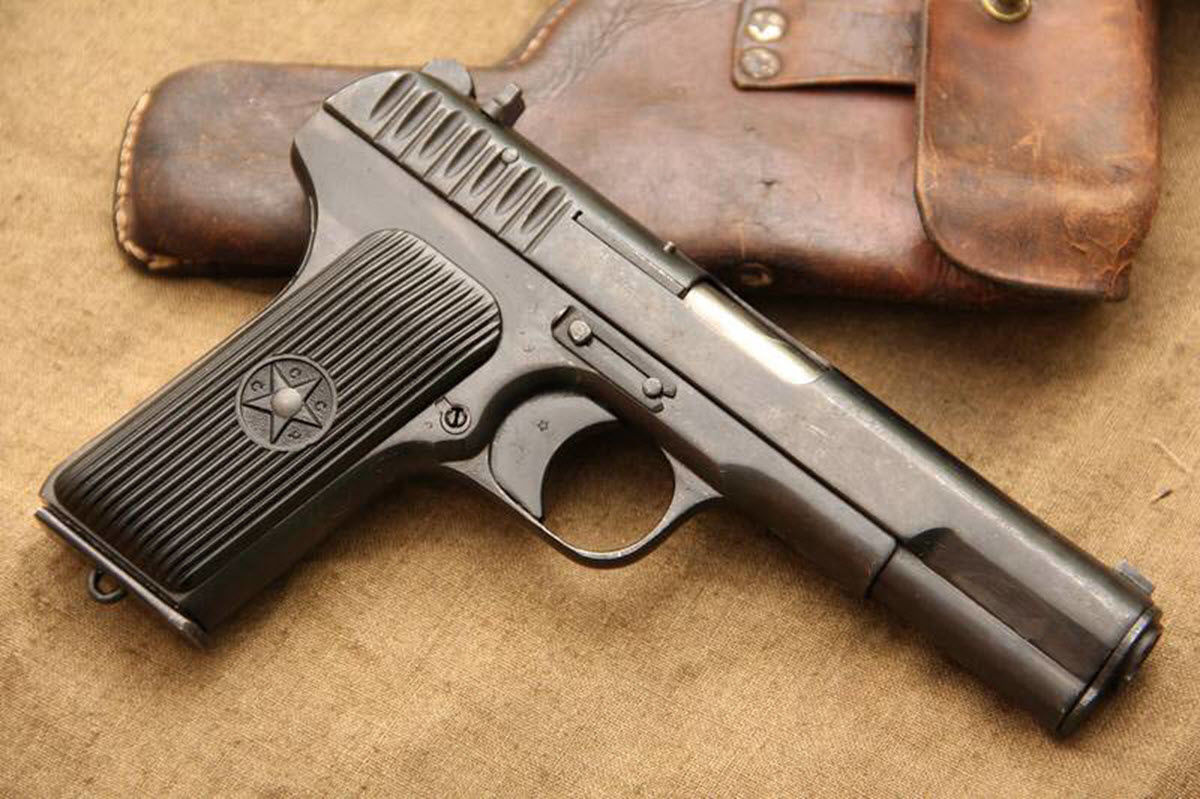
The TT pistol, or Tula Tokarev, was developed by Fyodor Tokarev in the early 1930s as a replacement for the obsolete Nagan M1895 revolver. It was adopted by the USSR army in 1930.
The TT was heavily influenced by the design of the American Colt M1911 pistol. This pistol uses short-stroke, locking action with 7.62x25mm cartridge, which was analogized to the German Mauser C96 cartridges.
The TT was widely used by the armed forces and internal affairs agencies of the Soviet Union. It proved to be a reliable weapon for Soviet fighters during the Great Patriotic War and in subsequent years.
Korovin's pistol

The pistol was designed by Sergei Korovin and is one of the very first domestic semi-automatic pistols. It appeared in the early 1900s, specifically around 1908.
The pistol is a simple striker-fired pistol of .25 ACP (6.35 mm Browning) caliber. Designed primarily for civilian use and officers as a personal defense weapon.
PSM
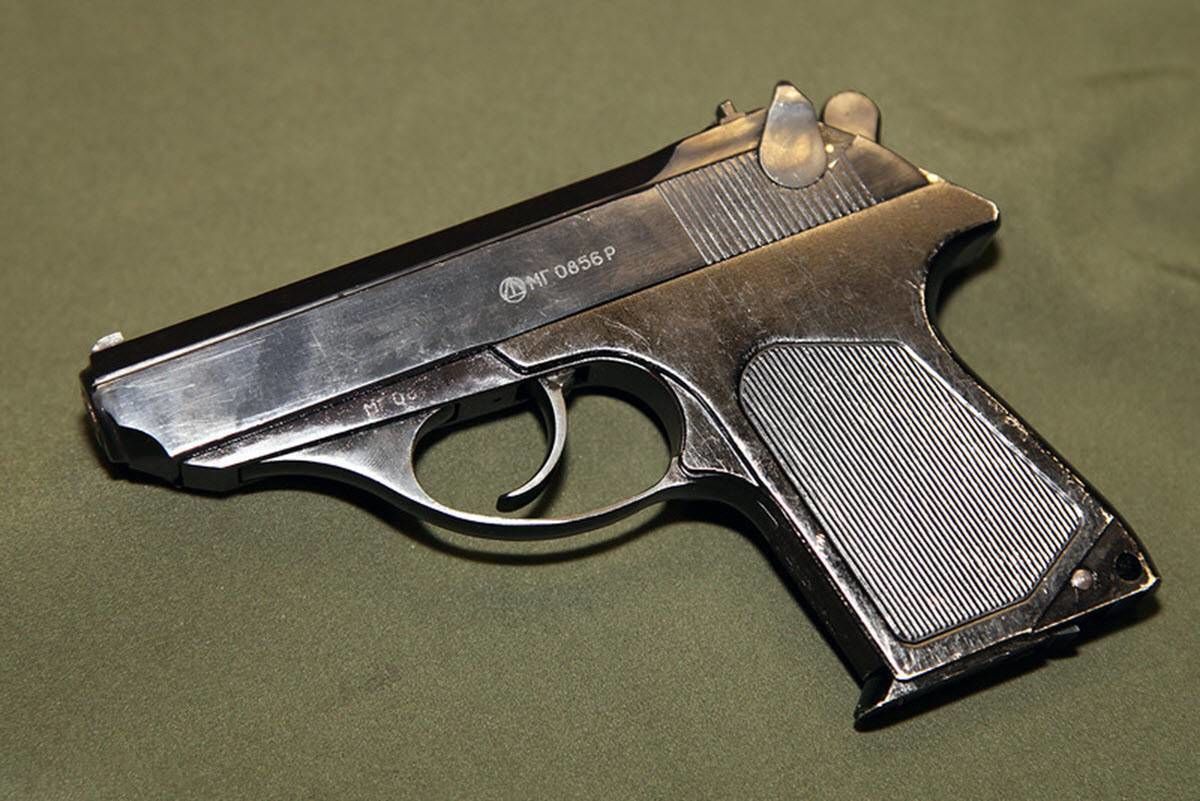
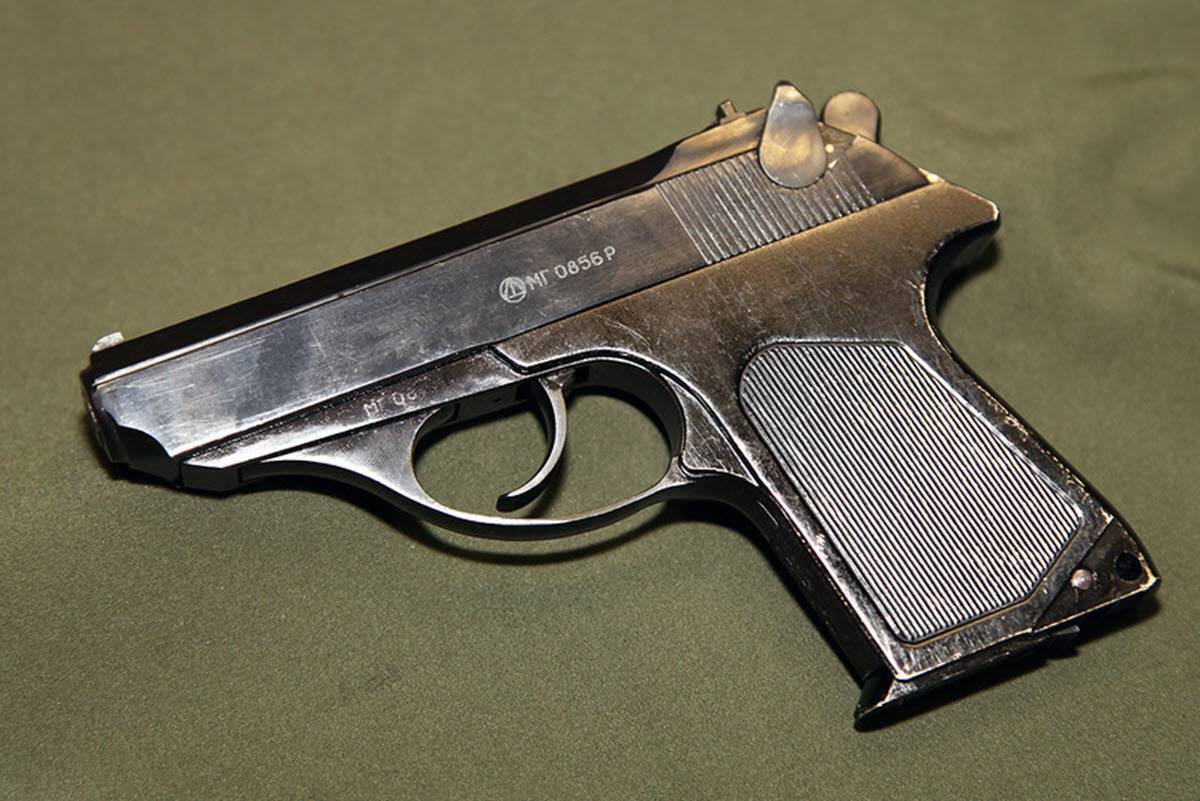
Late Soviet period semi-automatic small caliber pistol designed for specialized use. It was developed between 1970 and 1972, and adopted for service in 1974. The pistol was designed by special order of the KGB.
It was a compact concealed carry weapon for top commanders and special units of KGB and MVD. It was probably intended for secret operations. Some similarities with the Walther PPK model can be seen.
C4 и C4M
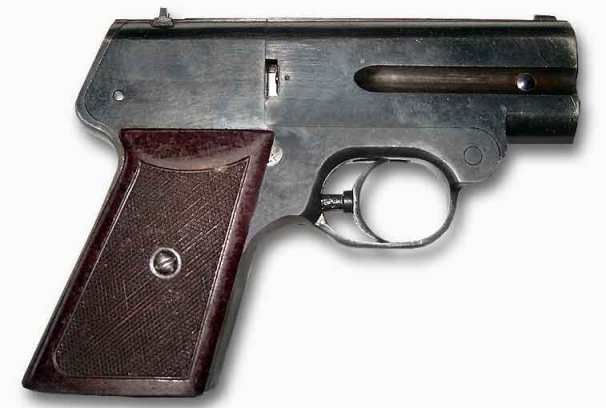
Double-barreled pistol with silent and flameless firing capability. Caliber 7.62 millimeters, uses special cartridges with piston locking of powder gases, as described above for the PSS «VUL».
It is designed for covert special operations. The pistol is capable of firing up to 8 rounds per minute. According to the rules of use, the first shot must hit the target, and the second shot must be a "control" shot, to guarantee the result.
MSP «Groza»

Created on the basis of the previous model, as a more advanced variant. It was adopted for service in 1972. The design remained similar - vertically arranged block of 2 barrels and special cartridges with powder gas cutoff in the barrel.
SPP-1
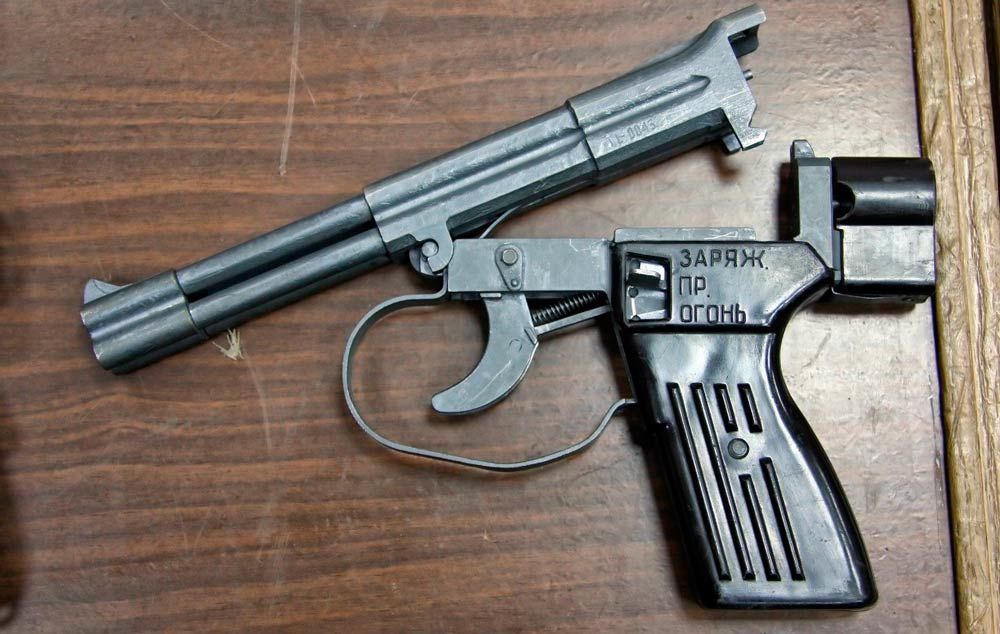
This is an underwater pistol from the USSR used by combat swimmers, and it could easily hit any target underwater. The caliber is 4.5, and at depths of up to 20 meters its sighting range reaches 11 meters.
TP-82
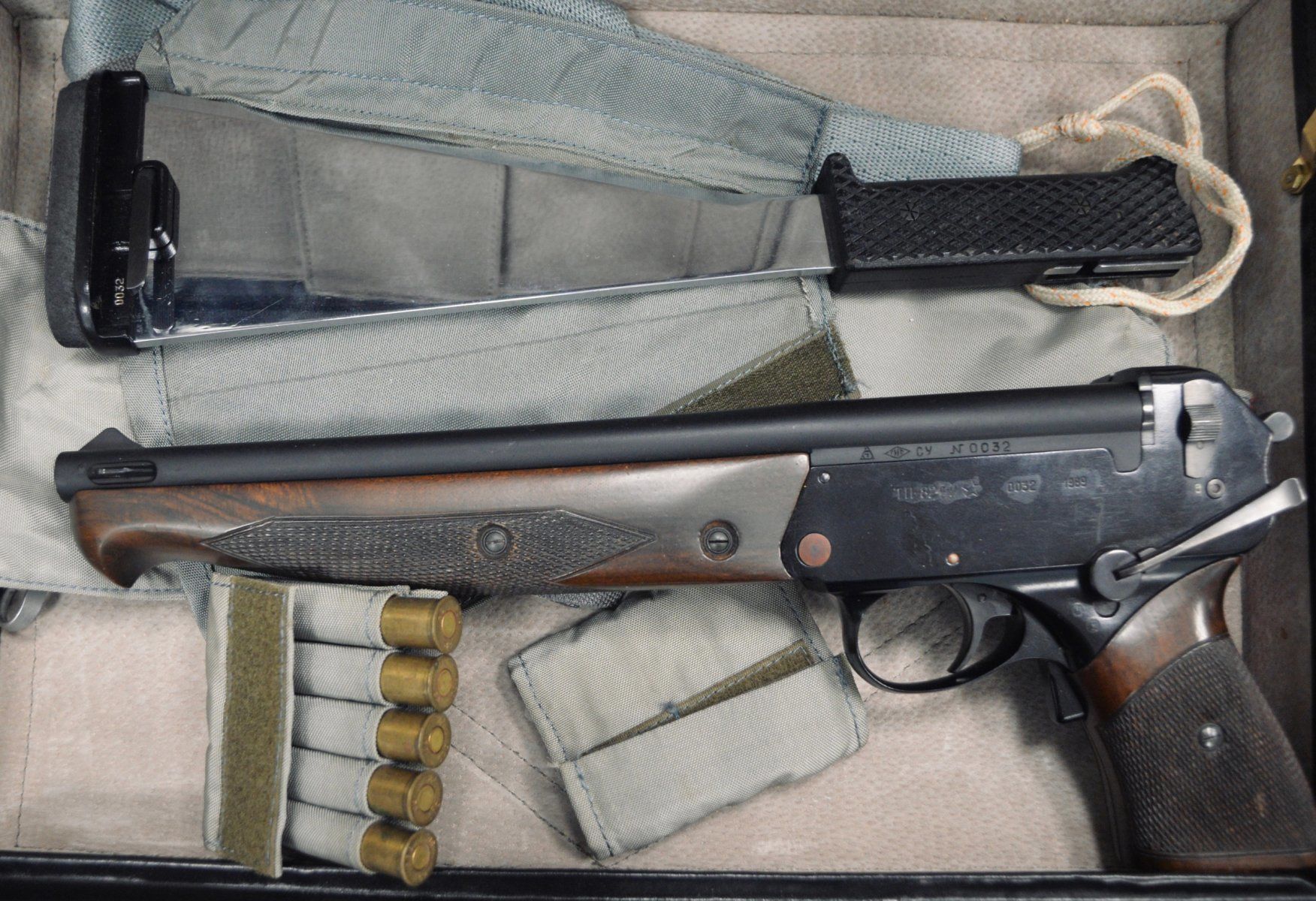
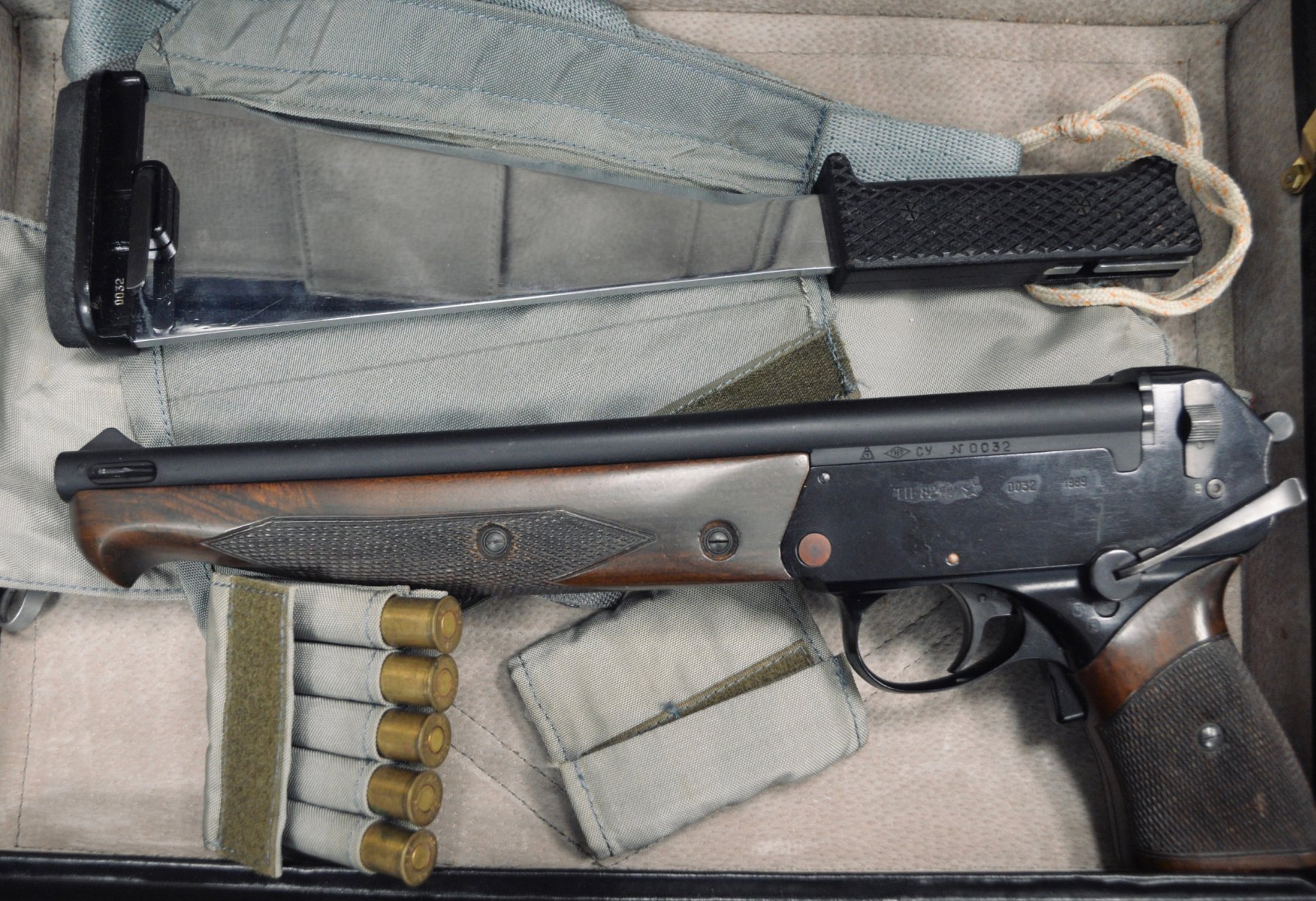
This pistol was produced at the Tula factory and belongs to the category of three-barrel hunting pistols. During the Soviet era, it was part of the weapon set of cosmonauts. An interesting feature - as a buttstock it was possible to use an attached machete spatula in a scabbard.
Makarov pistol PM
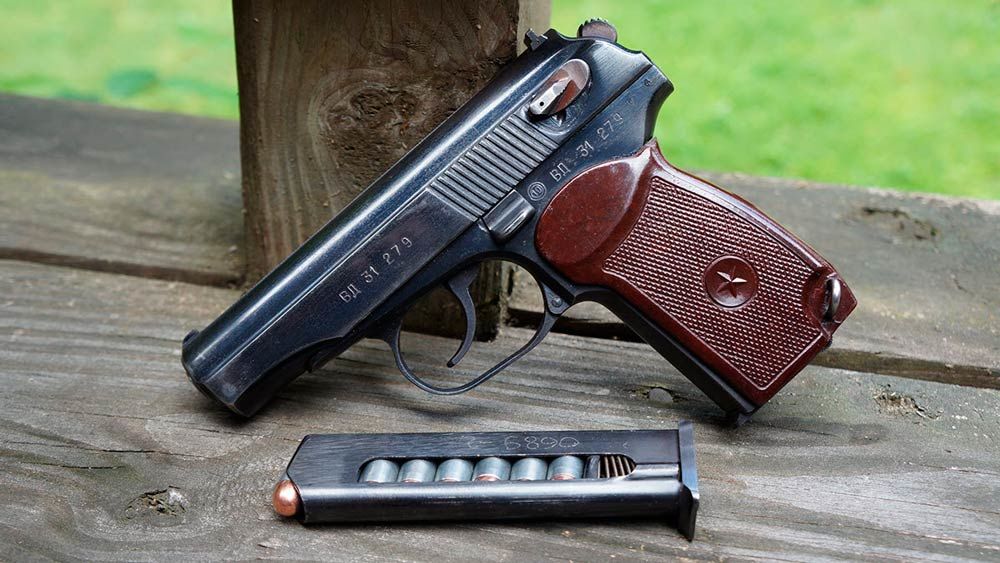
For the sweetest part we left the Makarov pistol, which to this day has great popularity. The caliber of the pistol is 9x18 millimeters, and it can fire up to 30 shots per minute. To this day, it is the personal weapon of the armed forces and police.