Degrees of steak doneness - types, peculiarities, what to serve and popular myths
Steaks are a truly meaty, mouth-watering dish, the taste of which is enjoyed by people all over the world. But here's a question: have you ever found yourself in a restaurant and looked at the menu, not knowing how to order a steak?
Medium, bloody, well-done - what do these terms even mean? Let's dive into the art of steak cooking - break down the possible degrees of doneness, as well as popular myths.
Degrees of steak doneness
Blue Rare
This is a steak for the adventurous who want their meat to be as close to its natural state as possible.
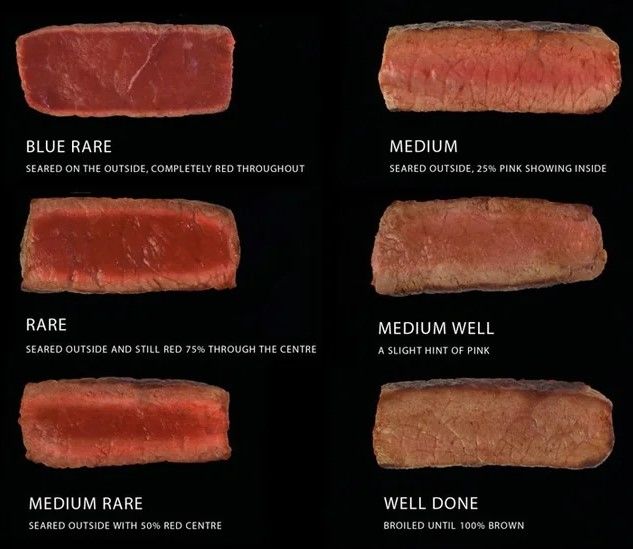
As for appearance and texture, imagine this - a steak with a dark red, almost purple center, cool to the touch. And the outside is a light, quick roast. The temperature range is about 115°F (46°C).
This is a dish for the bold, for those who appreciate the pure, almost raw, undistorted flavor of beef. Not everyone is ready to take on this challenge, so we move on.
Rare
If Blue Rare roast is too raw for you, Rare may be the perfect option for you. The steak has a bright red center and is slightly warm. It is maximally soft and juicy.
The temperature range is 120°F to 125°F (49-52°C). Suitable for those who enjoy the essence of meat with a touch of heat. This is a raw, yet gourmet meat. Can you feel the difference? If not, move on.
Medium Rare
Medium rare! Many steak lovers claim that this is the perfect degree of searing. But why?
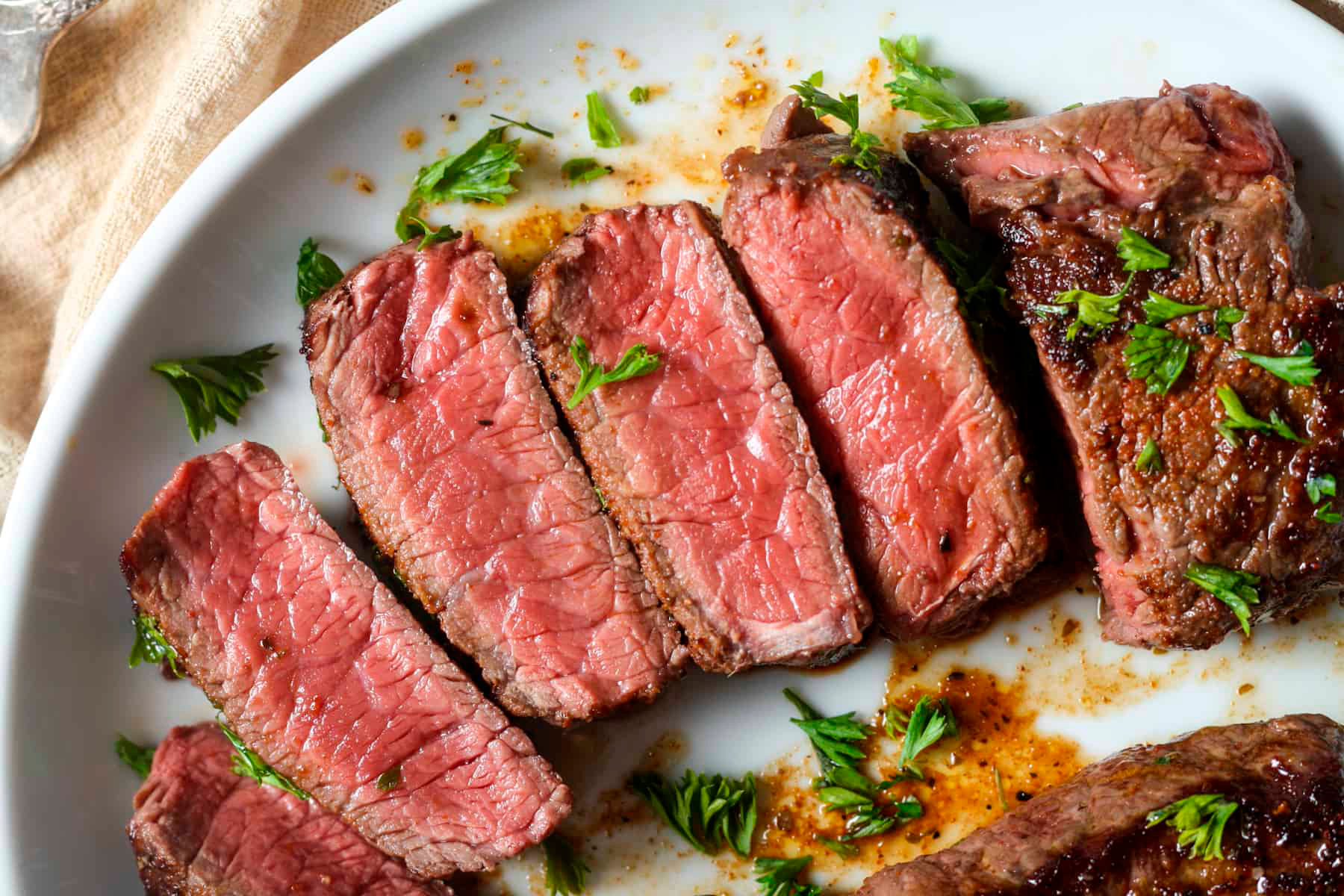
Imagine a warm, pink center. The meat is juicy, with a little more firmness than Rare, but no longer raw, striking a balance between remaining soft and not being squeamish.
Temperature range 130-135°F (54-57°C). For many, this is the most favorite degree of doneness for steaks. Not too raw, not too cooked. It's just right. Are you a fan of medium rare?
Medium
If you find Medium Rare unacceptable as well, take a closer look at this variant. Pink center, but already with a hint of brown cooked meat. It's slightly less juicy than Medium, but still succulent.
Temperature range 140-145°F (60-63°C). Warm, but not scalding. For balanced people who want more roasted than raw. This is the golden mean.
Medium Well
Appearance and texture - the steak is mostly brown, with a slight pinkness. It's no longer as soft and juicy, but it doesn't scare you with shades of red.
The temperature range is from 150 to 155°F (65-68°C). For those who lean toward a more charred steak, but with a hint of juiciness.
Well-Done
And one last option is "well-fried". Contrary to popular belief, this does not mean burnt or completely flavorless. Brown all over, with no trace of pink meat. Firm and with a distinct fiber texture.
Temperature range of 160°F and up (71°C and up). For those who like a fully cooked steak with a rich, mature flavor. Well-cooked doesn't mean overcooked. It's simply your choice.
Here's a visual comparison chart:
Myths about the degree of doneness
Steak, being such a popular dish, has its share of myths. Let's debunk some of them.
Rare steak can make you sick
Some people believe that eating a steak cooked to Rare degree can be poisonous. This belief is often due to concerns about bacteria and pathogens in raw meat.
First of all, steak that has been responsibly sourced and hygienically cooked is relatively safe to eat in this form. Producing companies are careful about product quality and their reputation, as are the restaurants that buy this meat.
Second, bacteria reside on the surface of the meat. When you grill a steak, even if it's cooked blue rare, the high temperature kills the bacteria on the outside.
This is not the case with ground meat. Since it is mechanically processed and stir-fried - bacteria from the surface can get into it, so it is recommended to cook hamburgers to at least medium rare.
But for regular cut steaks, Rare is generally safe. Of course, people with weakened immune systems or other health problems should consult with their doctor about this.
Steaks oozing blood
Some people believe that the red liquid oozing out of a steak is blood. Surely someone you know or relatives, especially women, have cried out "I won't eat meat with blood"?
Many diners are put off by what they think is "blood" in a steak. In fact, this red liquid is not blood at all. It is a mixture of water and a protein called myoglobin. Myoglobin is responsible for giving the meat its red hue.
When the steak is cooked, the protein undergoes a change that causes it to darken, so well-seasoned steaks lack that red "juiciness". All the real blood is drained out during the meat processing.
Rest assured that you are not consuming blood when you bite into a juicy steak. It's just water and proteins that give the meat extra flavor and juiciness.
The thermometer draws out the juices
Myth - Piercing a steak with a thermometer draws out precious juices from the steak.
Truth - A tiny piercing with a thermometer will not cause the steak to lose a significant amount of juice. But if you cut an undercooked steak too early, the juice will be lost. So feel free to use a thermometer and let the steak "rest" before slicing.
Well Done is dry and flavorless
Myth - If you cook a steak to Well Done doneness, it will be dry and flavorless.
Truth - when cooked properly, a well-done steak can be juicy and flavorful. The key is to keep an eye on the temperature and use techniques such as browning to maintain moisture.
Scientific processes
When we talk about degree of frying, we're not just discussing personal preference. There's science involved. But what exactly happens to a steak during the cooking process?
Maillard's reaction
Have you ever wondered why steaks turn brown when cooked? It's the Maillard reaction.
It's a chemical reaction between amino acids and reducing sugars. Fancy, right? It's what gives dishes their distinctive flavor.
This reaction is responsible for the beautiful brown crust on your steak. But it's not just about color, it's about flavor. The Maillard reaction releases hundreds of flavor compounds, making steak something more than just a piece of meat.
The Maillard reaction usually starts at 285°F (140°C). So if you want a nice crust, make sure your skillet or grill is hot enough.
Collagen to gelatin
Collagen is a protein found in meat that gives it toughness. But when meat is cooked, collagen breaks down into gelatin.
Gelatin is responsible for the juiciness of the steak. It retains moisture, preventing the steak from drying out.
For steaks with a lot of collagen, such as chops or brisket, slow cooking is important. For our favorite steaks, the right internal temperature ensures sufficient collagen breakdown without over drying the meat.
Garnishes for different degrees of doneness
Now that you've mastered the art of choosing the right degree of rare steak, how about serving it with the perfect side dish?
Rare
- Crispy Greens: A fresh salad with a savory vinaigrette perfectly complements the almost raw steak.
- Enhance the flavor of the beef with a rich red wine. A culinary pairing made in heaven!
Medium
- Creamy Mashed Potatoes: The velvety texture of mashed potatoes pairs perfectly with a medium steak.
- Grilled Asparagus: The charring hue of the asparagus echoes the grill marks on your steak. Perfect harmony!
Well
- Roasted Root Beef: The earthiness of root vegetables pairs perfectly with the rich flavor of a well-seasoned steak.
- Pepper Sauce: Spice up your steak with a spicy pepper sauce. It takes steak to new heights!
Final thoughts
A steak is more than just a piece of meat. It's an experience, a journey. From the cool, raw center of blue rare to the mature, fully cooked well-done, it's a world of flavors and textures.
Hopefully, after this article, the next time you have a menu in front of you, you'll know exactly what kind of steak you want. And remember, whether you're a fan of weak-cut or a Well Done devotee, there is no right or wrong decision. It's all about personal preference.