Countries where the AK-47 Kalashnikov assault rifle is a symbol of the state
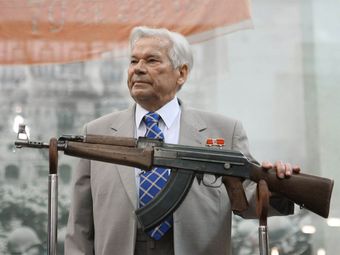
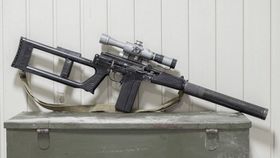
The Kalashnikov assault rifle (AK-47 or AKM) is a globally recognizable model of assault rifles, created in the middle of the XX century. AK quickly gained "credibility" due to its characteristics, becoming for some countries a symbol of national resistance, struggle for freedom and personification of statehood.
History of the creation of the AK-47
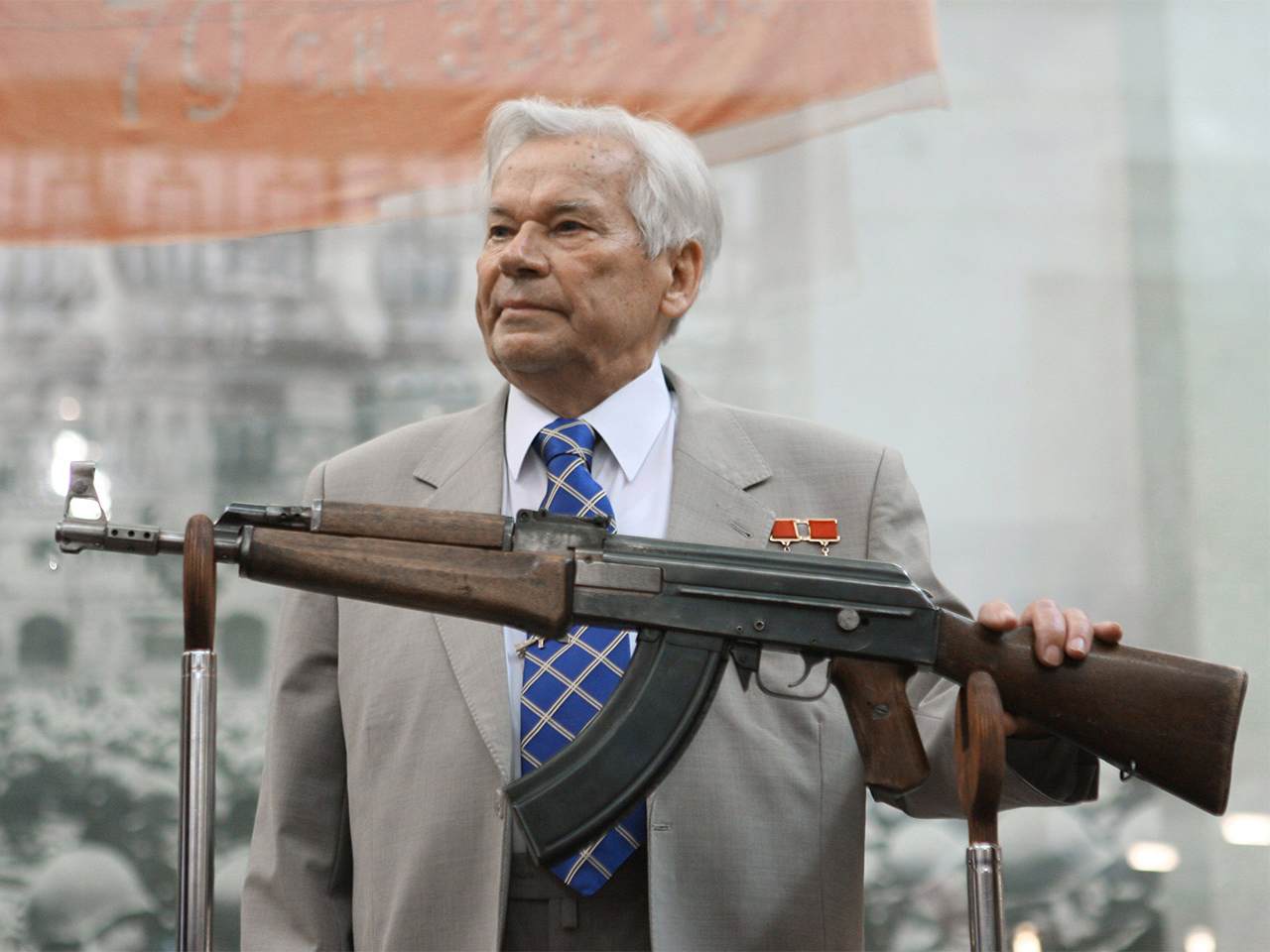
The name of the weapon comes from the name of the creator - engineer Mikhail Timofeevich Kalashnikov. Mikhail Kalashnikov began his career as a weapons designer in 1941, when he was recovering from a shoulder wound received near Bryansk (he was a tanker). Kalashnikov recalled those events:
I was in the hospital. A soldier lying next to me asked: "Why do our soldiers have only one rifle for two or three men, when the Germans have automatic rifles?" So I designed a machine gun for the soldier, calling it the "Kalashnikov Automatic Machine Gun," and it had the year of manufacture on it - 1947.
In the late 40s, the USSR was looking for a new automatic weapon for the army. They were looking for a solution that was reliable and cheap to produce and maintain. Mikhail Timofeyevich presented his model of automatic rifle, which surpassed its competitors in a series of tests. And 2 years later, the AK was adopted by the Soviet army.
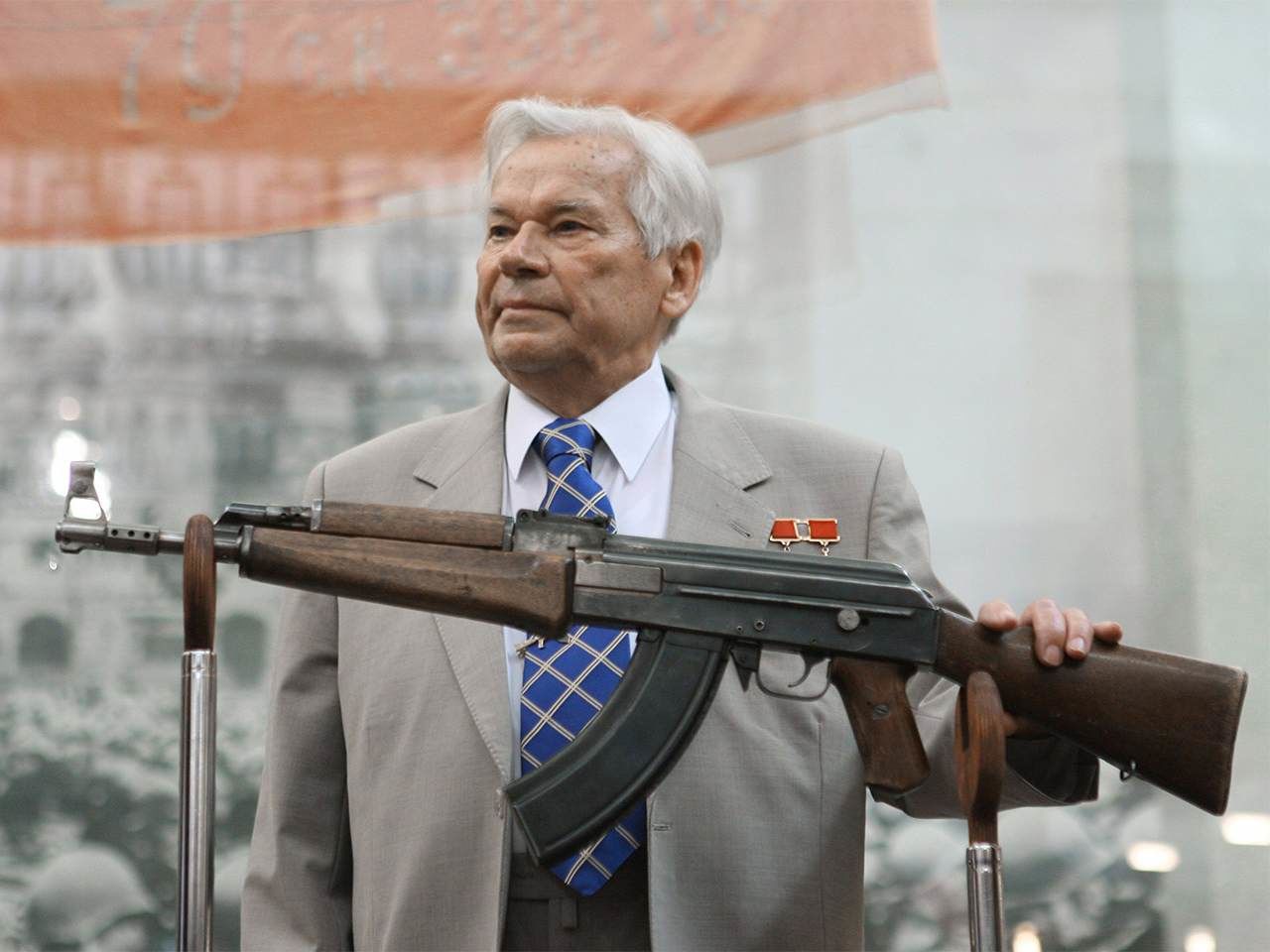
The advantages of the AK-47 are simplicity and reliability:
Small number of moving parts, simple design and quick assembly-disassembly make the weapon "ideal" for soldiers and those who have not been trained in military craft. And reliability is described as follows: the assault rifle "works" both in deserts and jungles.
Russia
During the Cold War era, when the world was divided into two warring blocs, the assault rifle symbolized Soviet military might. Many countries that were allied with the Soviet Union at the time received this weapon as military aid.
For its ease of maintenance and reliability, it became the "No. 1 choice" for armies and guerrilla units around the world:
He became a participant in the major military conflicts of the second half of the 20th century, from the jungles of Vietnam to the mountains of Afghanistan.
After the collapse of the Soviet Union, the machine gun became a symbol of national pride for Russians, reflecting the heroic past of a great nation.
In honor of the creator of this weapon, a monument to Mikhail Kalashnikov was unveiled in Moscow in 2017. The 7-meter monument shows the genius designer together with his invention.

Also the monument stands in Izhevsk city.

The Kalashnikov Company, the successor of the brand, continues its traditions in the field of weapons production. But there are also new directions: solutions in the field of transportation and robotics.
Mozambique
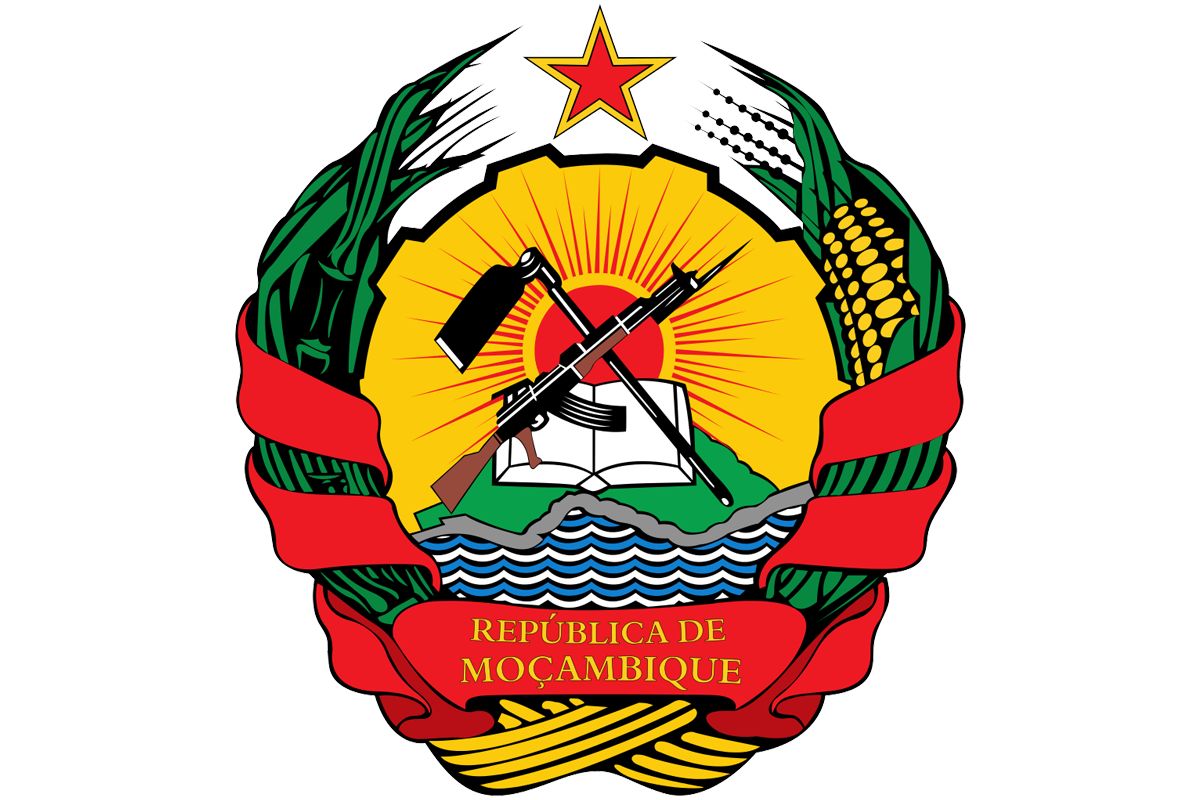
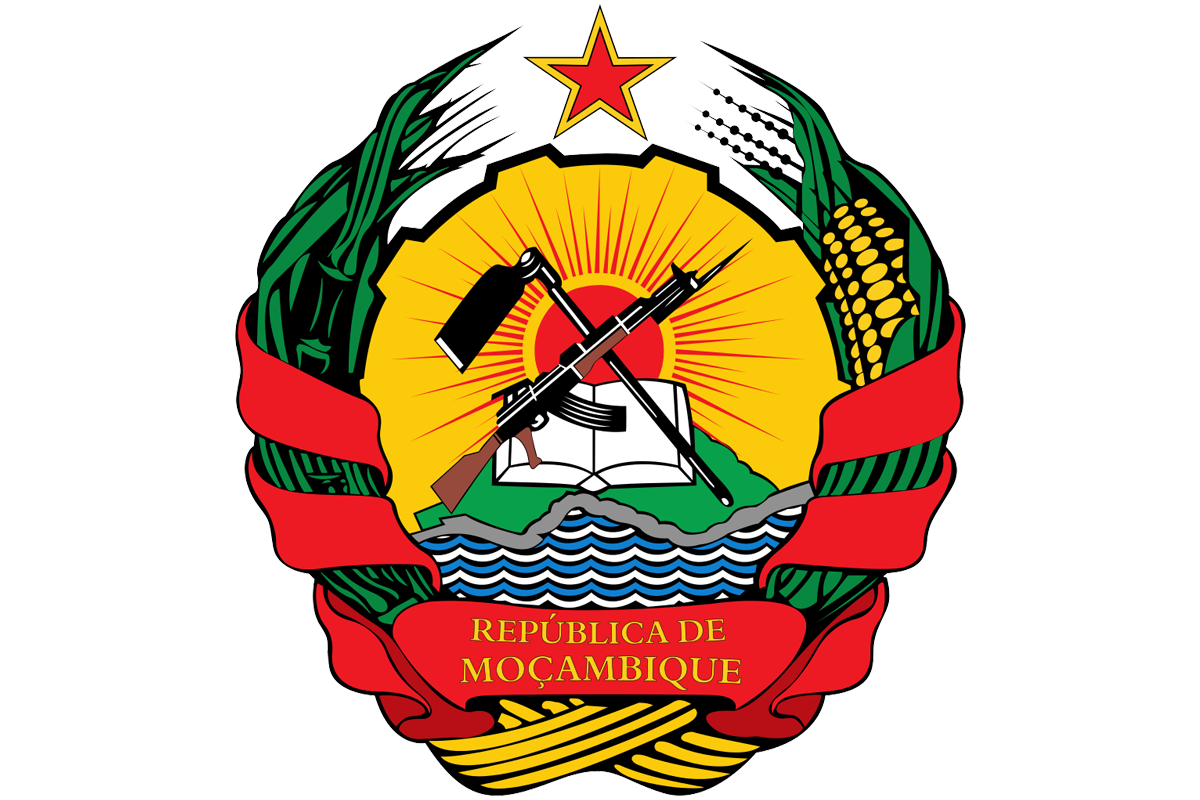
In the 1960s and 1970s, the FROLIMO (Front for the Liberation of Mozambique) waged an armed struggle against the Portuguese colonial administration. The assault rifle became the main weapon of these fighters. After independence was achieved in 1975, it appeared on the national flag as a reflection of the struggle for the country's independence from Portuguese colonial rule.
The flag shows an AK-47 with a bayonet fixed, crossed with a hoe, and an open book above it. The symbols are arranged on a field of green, black and yellow stripes with a white border.
East Timor
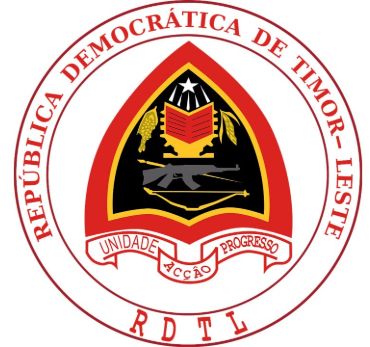
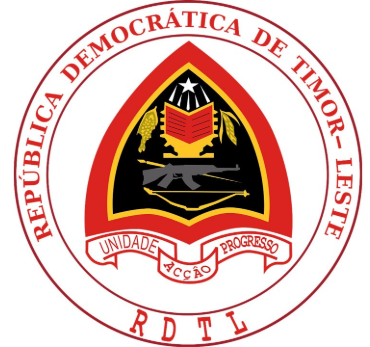
The national emblem of East Timor (Timor-Leste) also features an image of an AK-47 assault rifle. The emblem is very symbolic and reflects the struggle and history of East Timor's struggle for independence.
In the center of the emblem is a shield, which shows a red field with a black silhouette of a curved traditional Timorese house, the Uma Lulik. At the top of the shield is a star, symbolizing a guiding light on the road to freedom. Also depicted is a book, symbolizing knowledge and the importance of education. And prominently displayed is an AK-47 crossed with a spear and a bow next to it, symbolizing the fusion of modern and traditional methods of defense and the transition from war to peace.
The inclusion of the AK-47 in the emblem speaks to the role of this weapon as a tool used by many East Timorese resistance fighters during the long struggle against Indonesian occupation that lasted from 1975 until the country's independence in 2002. Therefore, the image of the rifle has important historical significance for the country.
The emblem was adopted in 2007 and reflects the identity and resilience of the East Timorese people. Although the placement of such a modern weapon on the national emblem may seem unusual, it is not the only example in the world.
Burkina Farso
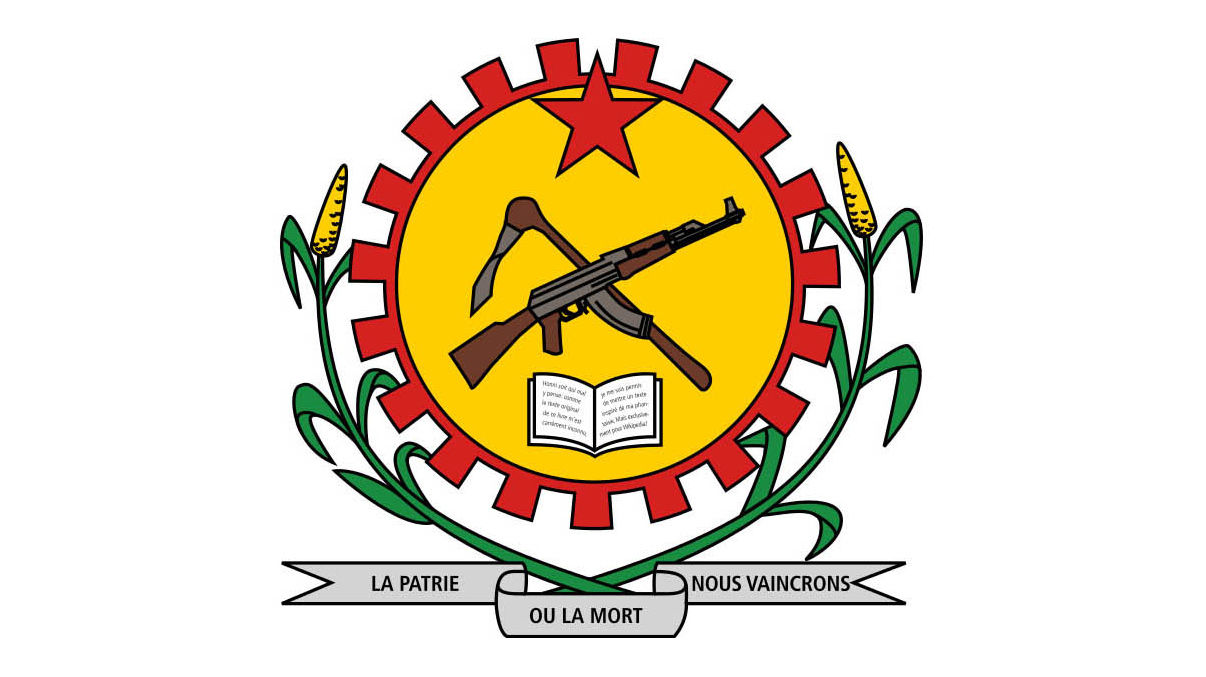
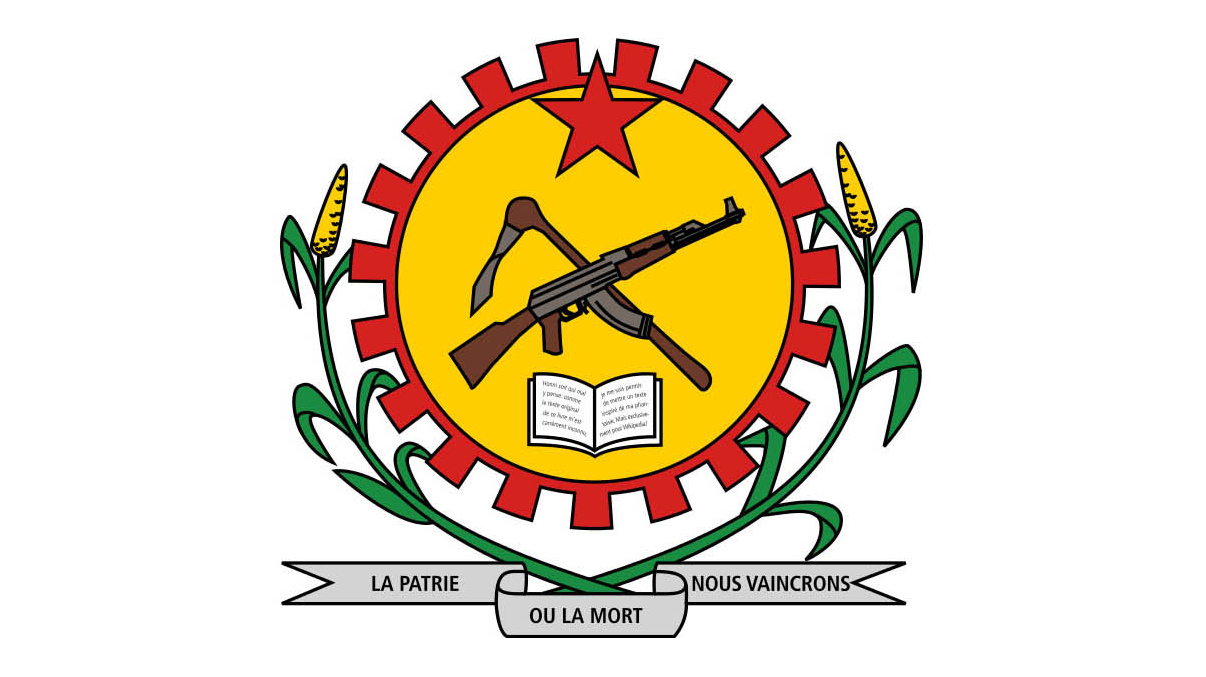
The national coat of arms of Burkina Faso until 1997 also included an image of a crossed AK-47 assault rifle and a hoe, a farming tool. The coat of arms is a shield with a star in the upper part, which symbolizes revolution, surrounded by maize sprouts, which means agriculture and fertility.
At the bottom of the shield is an open book, which symbolizes education and the importance of knowledge for the future of the country. The emblem with AK-47 rifles reflects the revolutionary spirit of Burkina Faso during the presidency of Thomas Sankara in the 1980s, when the country's name was changed from Upper Volta to Burkina Faso, meaning "land of honest men" or "country of honest men". Sankara's government was characterized by a commitment to anti-imperialism and national pride, and the symbolism of the coat of arms echoes this period of the country's history.
Zimbabwe
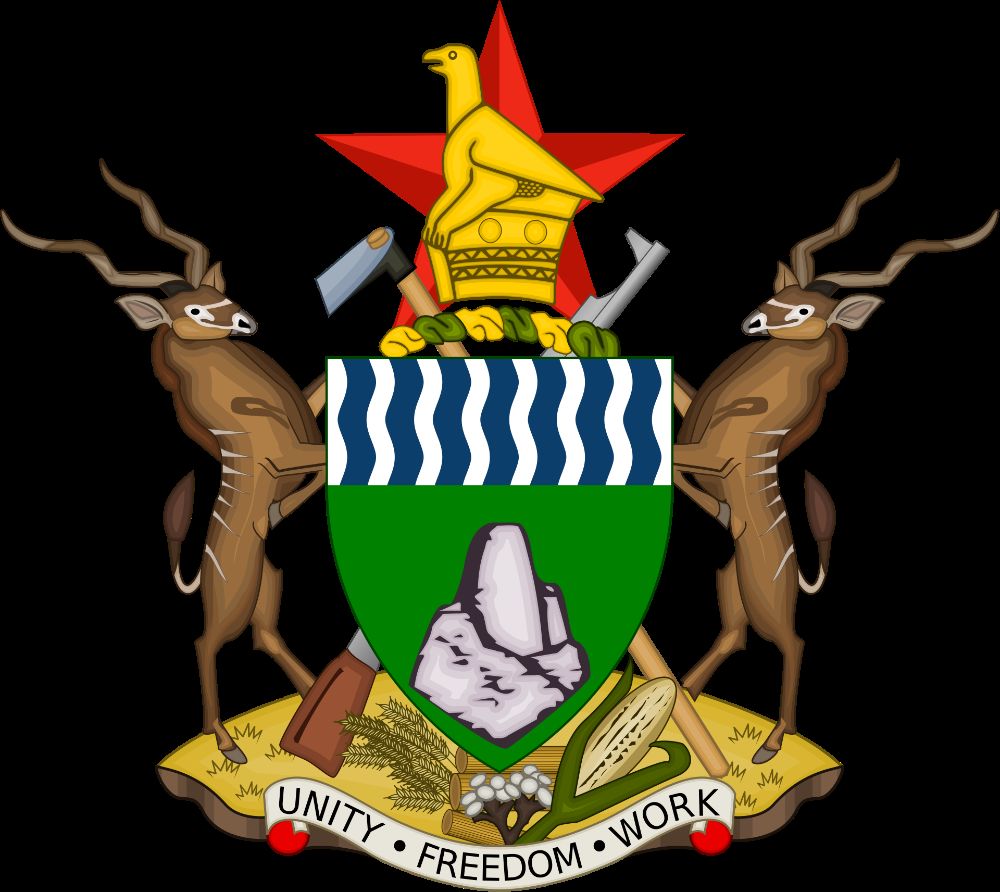
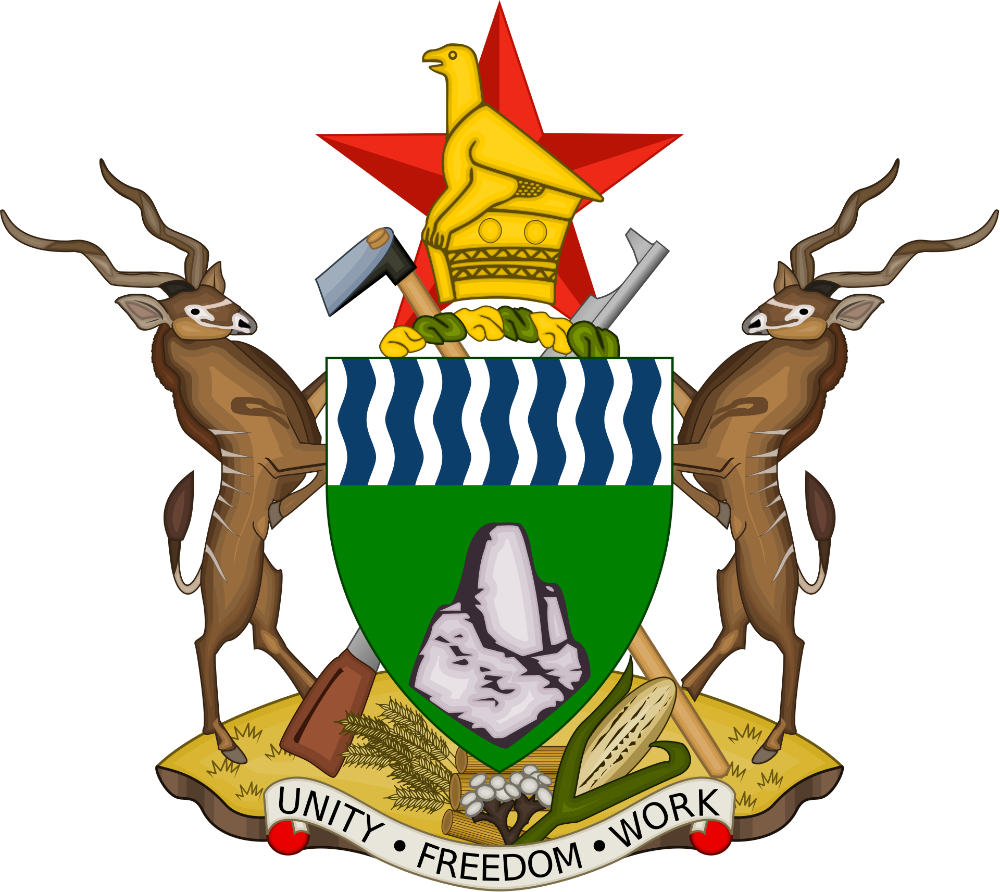
Zimbabwe's national emblem features the AK-47 (AKM) as a symbol of defense. The emblem, adopted after Zimbabwe's independence in 1980, reflects the country's history and the struggle against colonial rule.
The emblem depicts two kudus antelopes on either side of the shield standing on an earthen mound on which are stacked wheat, cotton and maize, which are important crops in Zimbabwe.
Above the shield is a red five-pointed star and the Great Zimbabwe Bird, which is the national symbol and emblem of Zimbabwe, taken from the flag of Zimbabwe. The red star symbolizes the aspirations of the nation and the revolutionary nature of its struggle for independence.
Behind the shield an AK-47 assault rifle and a hoe are crossed. The use of the AK-47 in this context is a direct reference to the war of liberation against the colonial government and the guerrilla warfare tactics used by the Zimbabwe African National Liberation Army (ZANLA) and the Zimbabwe People's Revolutionary Army (ZIPRA) - the military wings of the political movements that led to the creation of modern Zimbabwe.
The AK-47 depicted on the emblem serves as a reminder of the country's struggle for independence and its constant vigilance in defense of its sovereignty.
Somalia
In the 1990s, after the fall of the Siad Barre regime, the country was plunged into the chaos of civil war, with armed groups fighting for control of territory.
The assault rifle became the weapon of many groups and became a "symbol" of power, of strength in war. Later - it became a sign of national identity. Many Somalis consider it a symbol of survival and stability of the nation in the conditions of long conflicts.
Middle East
This region has been the scene of many armed conflicts for many decades, involving both government forces and illegal armed groups. In this environment, the Kalash was associated with a symbol of resistance and struggle. It quickly became popular due to its qualities: it could be maintained in extreme desert conditions, where dust and sand would "incapacitate" other weapons.
During the Arab-Israeli wars, the Kalashnikov was the main weapon of the Arab armies. Later it is widely used by Palestinians in the fight against Israel. This weapon is preferred by rebel and terrorist groups (Hezbollah, Hamas, Islamic State).
This "tool" of warfare for many groups in the Middle East has become a symbol of resistance, struggle and desire for independence. It is often seen on graffiti, posters, and flags of the groups.
South America
In Colombia, Peru, Nicaragua, and El Salvador, gerilla movements have used these weapons against government forces. The reasons are the same: reliability, durability, ease of use, and low cost.
The Revolutionary Armed Forces of Colombia (FARC) and the National Liberation Army Movement (ELN) used the automatic rifle in their military actions. Arms supplies to the groups came from countries that supported them ideologically.
As in other regions, in South America the Kalash not only served a practical function but was also a powerful symbol. For the Guerillas and their supporters, it was associated with resistance, the struggle for freedom and social justice. But for those who faced violence and threats from the Guerillas, it was a symbol of fear, associated with blood, kidnappings and terrorist attacks.
Asia
The region, with its diverse history and culture, has not been immune to the influence of this weapon. In Vietnam, it is a symbol of resistance to the South Vietnamese troops and their American allies. North Vietnamese soldiers and the Viet Cong were supplied with weapons from the USSR.
In Afghanistan, during the 1979-1989 war, the automatic rifle was the weapon of the mujahideen fighting against Soviet troops, which was ideal for guerrilla warfare in mountainous conditions. The Kalashnikov is a symbol of many ethnic and religious conflicts in India, Pakistan and Sri Lanka.
Its use in armed conflicts has left an imprint on the national identity of Asian peoples:
- In Afghanistan after the Soviet withdrawal, the assault rifle is a symbol of national pride and resistance to foreign interference. It has been depicted on national posters and in art.
- In Sri Lanka, where the Kalashnikov was used in the long civil war between government forces and the Tamil Tigers, it has become a symbol of the struggle for autonomy.
To summarize
The AK-47 has become deeply embedded in the socioculture of many nations, influencing public opinion and the formation of national identity. In a number of countries, the Kalashnikov has become a symbol of resistance, power, revolution and national unity. For many regimes and movements, the Kalashnikov is an "instrument of power". The weapon has demonstrated the ability to control territories, suppress resistance and establish order.
In countries with authoritarian regimes or unstable political "climates," it is often associated with state power, serving to maintain control and eliminate opposition.